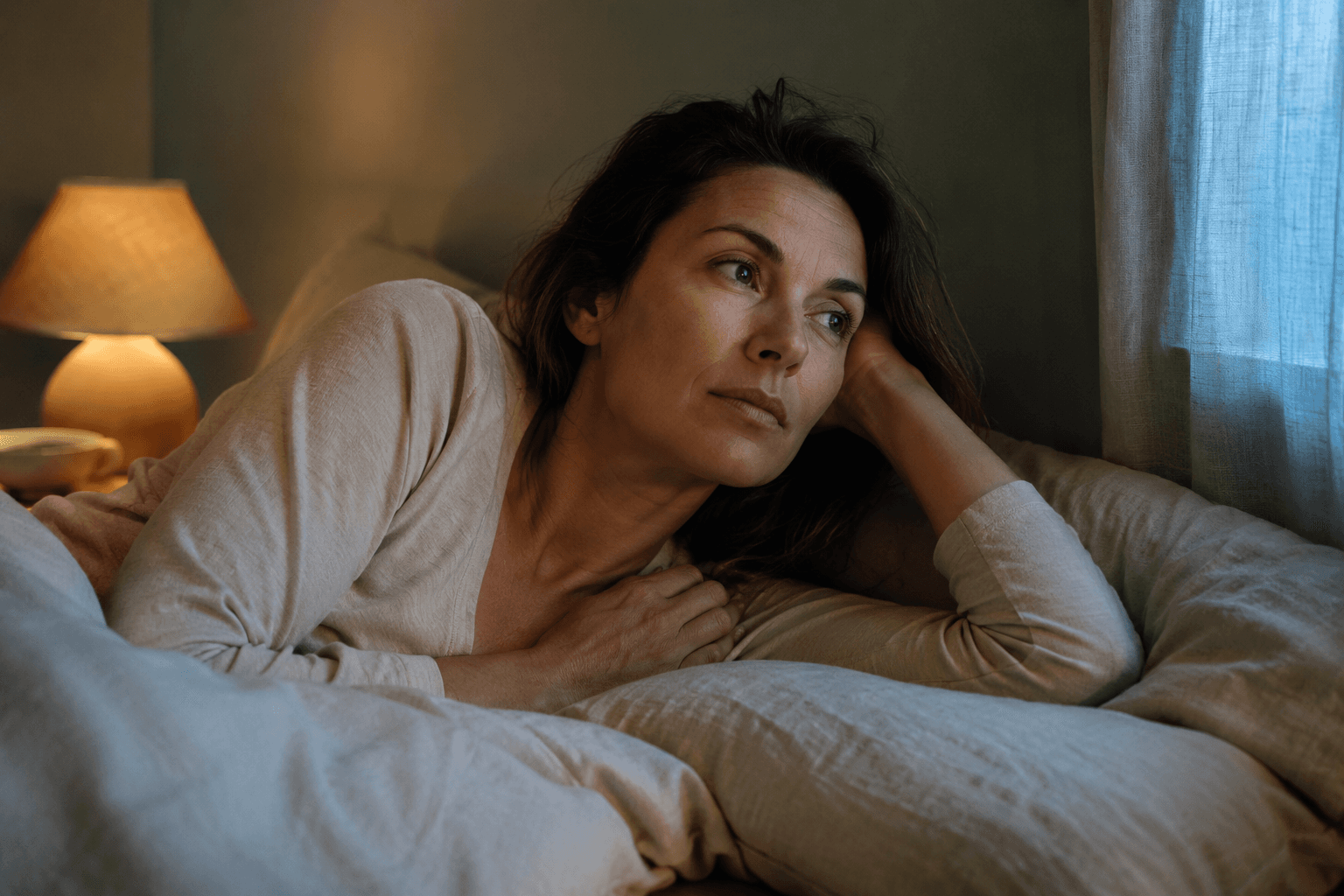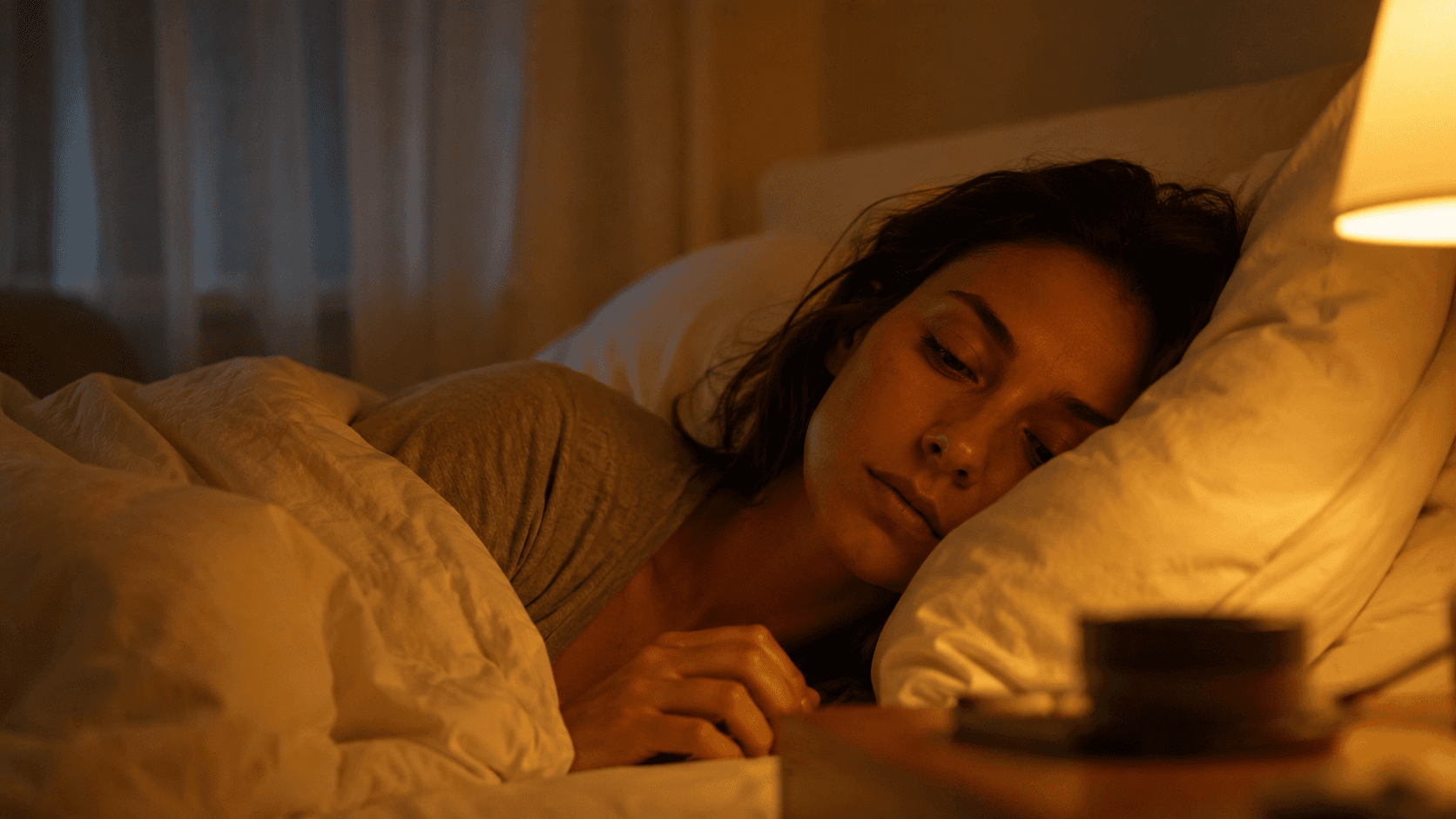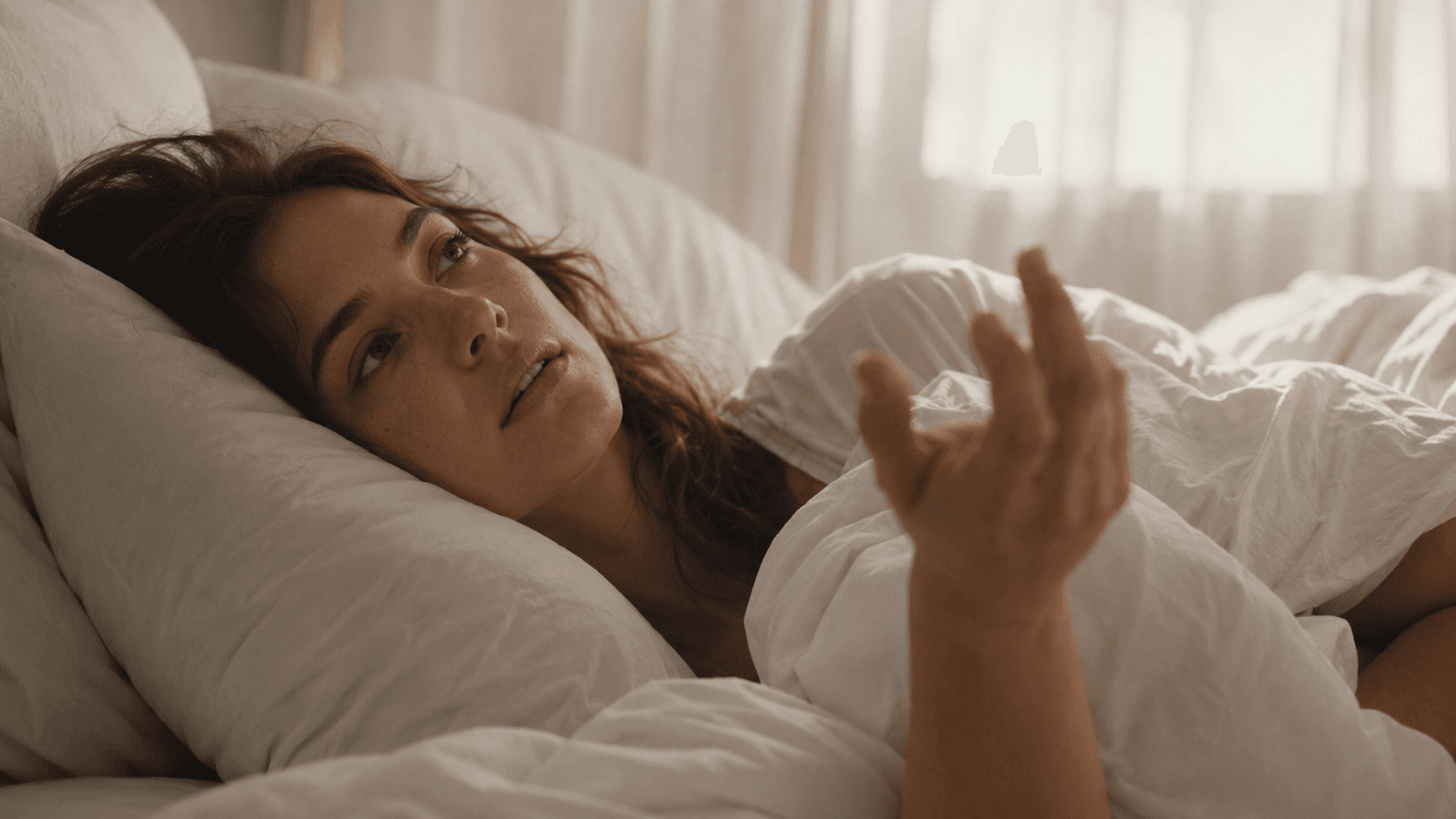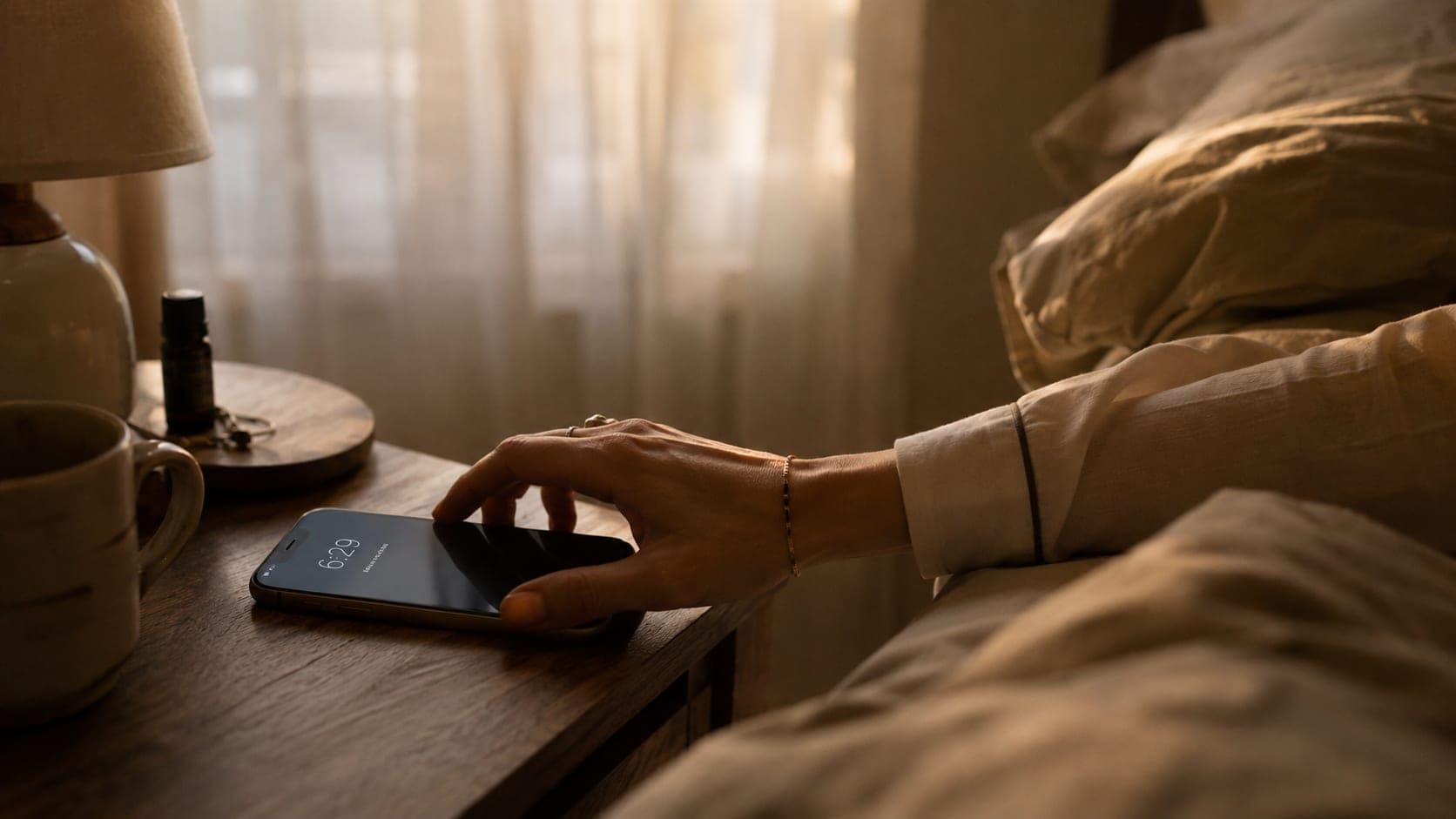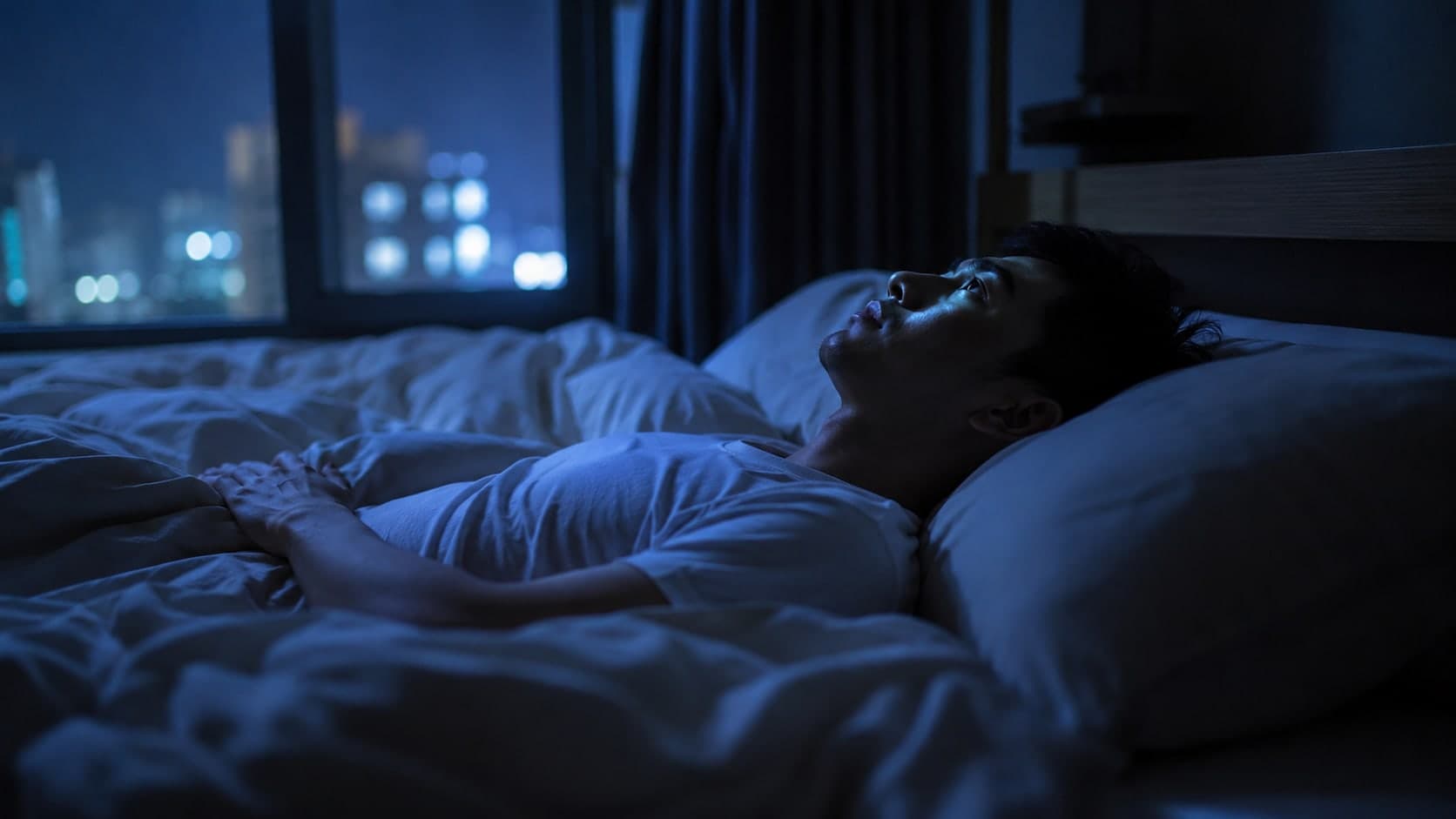
You have been horizontal for an hour. Every muscle aches. Your eyes feel like sandpaper. And your brain is running a full-capacity review of everything that happened today, everything that could go wrong tomorrow, and a conversation from three years ago you still have not resolved.
The clinical term is hyperarousal. It occurs when physical exhaustion accumulates in the body while the brain's arousal system stays activated by stress, cortisol, or conditioned wakefulness. These are two independent biological systems, and only one controls whether sleep begins. The solution is not more exhaustion. It is less arousal.
Sleep is supposed to be automatic. Flies sleep. Worms sleep. Plants have circadian rest cycles that predate vertebrate life by hundreds of millions of years. So when a fully grown adult lies down physically destroyed and cannot sleep, something is actively interfering with a process so fundamental it predates thought itself. That something has a name, a mechanism, and a surprisingly logical reason for existing.
Two systems. One body. One problem.
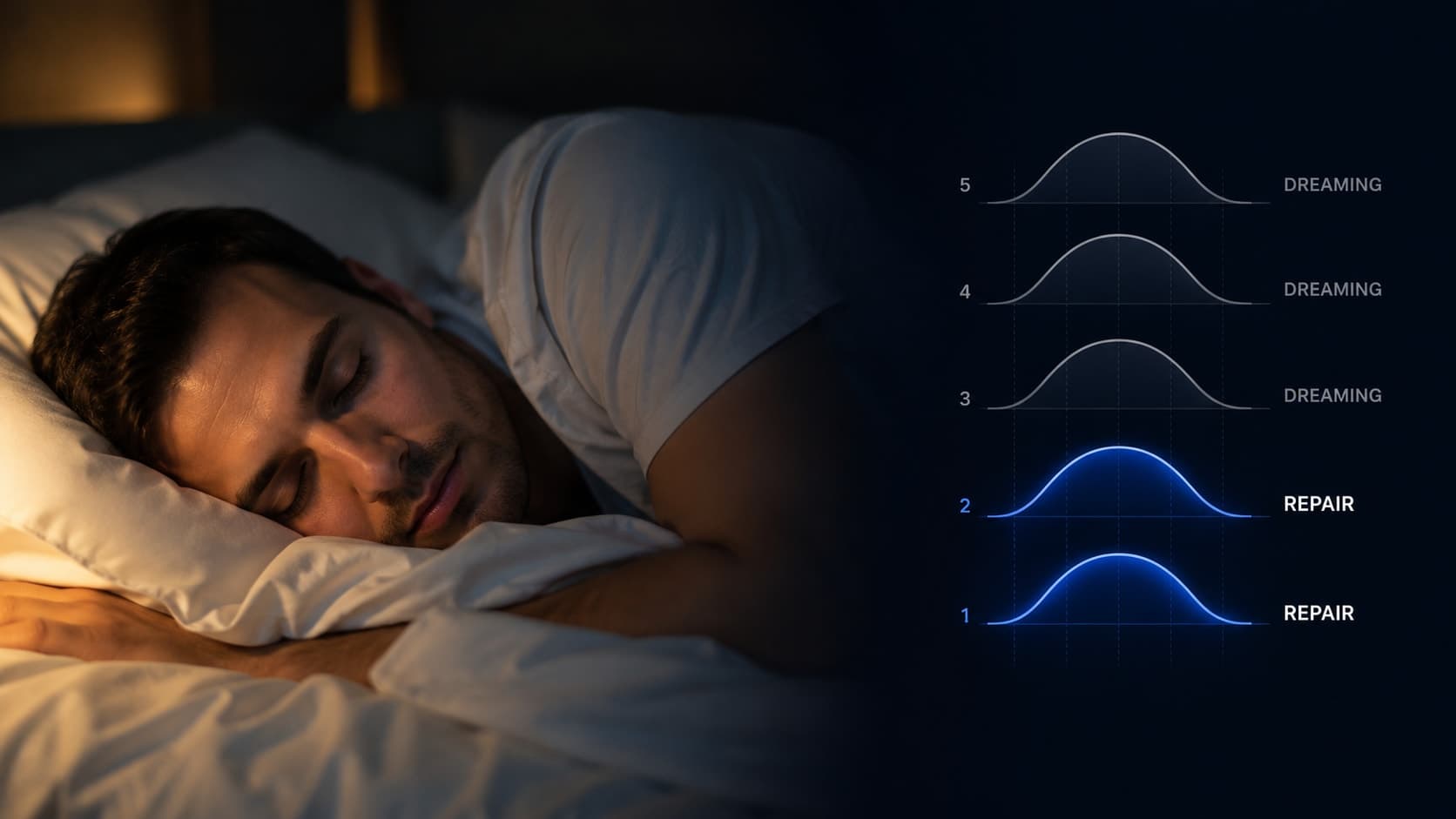
In 1982, sleep researcher Alexander Borbély published what became the foundational model for understanding when humans sleep. He called it the two-process framework. Process S is sleep pressure: the gradual accumulation of adenosine, a metabolic byproduct that builds throughout the day and creates the biological urge to sleep. The longer you stay awake, the more adenosine accumulates, and the stronger the drive becomes.
Process C is the circadian signal: your internal clock, running on a roughly 24-hour cycle, coordinated with light exposure, melatonin, and a dozen other hormones. For sleep to begin cleanly, both must align. Sleep pressure high. Circadian window open.
Neither process, on its own, guarantees sleep. Both can be working exactly as designed, adenosine saturating your receptors, your circadian clock signaling nighttime, and the arousal system can still override both. This is the part the model was not built to explain. And the part most people with chronic sleep problems are actually dealing with.
What 'wired' looks like inside a brain
In 2004, Eric Nofzinger and his team at the University of Pittsburgh used PET imaging to compare the brains of people with insomnia against good sleepers, while both groups were asleep. What they observed changed how sleep medicine understood the condition.
“Patients with insomnia showed significantly increased cerebral glucose metabolism during sleep compared with healthy subjects. Insomnia is associated with a state of nocturnal cerebral hyperarousal, reflected as an inability to disengage brain arousal systems during sleep.”
The hyperarousal was not a perception. It was metabolically measurable. Cortisol is the primary driver. When the stress response stays active into the evening, the HPA axis keeps cortisol elevated past its natural decline. Cortisol is a wakefulness hormone, the same one that rises before your alarm goes off in the morning. When it remains circulating at midnight, it competes directly with every sleep-promoting signal your body is trying to produce.
- Normal evening cortisol
- Stressed evening cortisol
- Melatonin release
Melatonin does not force sleep. This misunderstanding is why millions of people take melatonin supplements and still cannot sleep. Melatonin signals biological darkness. It tells the brain that environmental conditions are safe and appropriate for rest. When cortisol is elevated at 11pm, that safety signal gets blocked. The body waits. The brain keeps scanning for threats that are not there.
Which pattern is yours?
Insomnia is not one condition. It has three distinct patterns, each driven by a slightly different mechanism, each responding to different interventions. Identifying which one describes your nights is the first step toward the correct fix.
Sleep onset insomnia
You lie down and cannot fall asleep for 30 to 120 minutes. Your mind is active but not always anxious. You often feel physically calm but mentally awake.
Elevated evening cortisol combined with core temperature that has not dropped enough. Your arousal system is still receiving stay-alert signals from stress, light, or late activity.
The problem is not that you cannot start sleep. It is that your body has not been given the signals that make sleep possible. Signals are what change, not effort.
Sleep maintenance insomnia
You fall asleep fine but wake at 2, 3, or 4am and cannot get back to sleep for an hour or more. The awakenings often come with a jolt of alertness or a racing thought.
The cortisol curve begins its anticipatory rise around 3am. In dysregulated systems, this rise is earlier and steeper than normal, and there is no GABA-mediated brake to smooth it. A conditioned arousal loop develops around specific hours.
You are not failing to stay asleep. Your body is exiting a state it can no longer sustain on its current arousal budget. The lever is not the wake-up. It is what happens at 7pm the night before.
Early morning awakening
You wake at 4:30 or 5:00am and are done for the night, even though your alarm is at 7. This pattern often coexists with low mood or anxiety.
The cortisol awakening response has shifted earlier, sometimes by 60 to 90 minutes. This pattern is closely linked to depression, chronic stress, or perimenopausal hormonal shifts, and may need clinical evaluation.
Early waking that persists more than three weeks is worth investigating with a physician, especially if mood has changed. This is often the pattern that most benefits from proper diagnosis.
The bed has memory
Arthur Spielman's three-factor model of insomnia introduced a distinction that changed how sleep medicine approaches chronic cases. He separated the factors that predispose someone to insomnia, the events that trigger it, and the factor most often missed: the behaviors that perpetuate it long after the original trigger has disappeared.
The most powerful perpetuating factor is conditioned arousal. Every night spent lying in bed unable to sleep, anxious about not sleeping, watching the ceiling, your brain strengthens an association: bed equals wakefulness, equals frustration, equals the cortisol signature of sleep anxiety. This is classical conditioning. Pavlov's mechanism applied to your bedroom. After enough repetitions, the act of lying down begins to trigger arousal rather than rest.
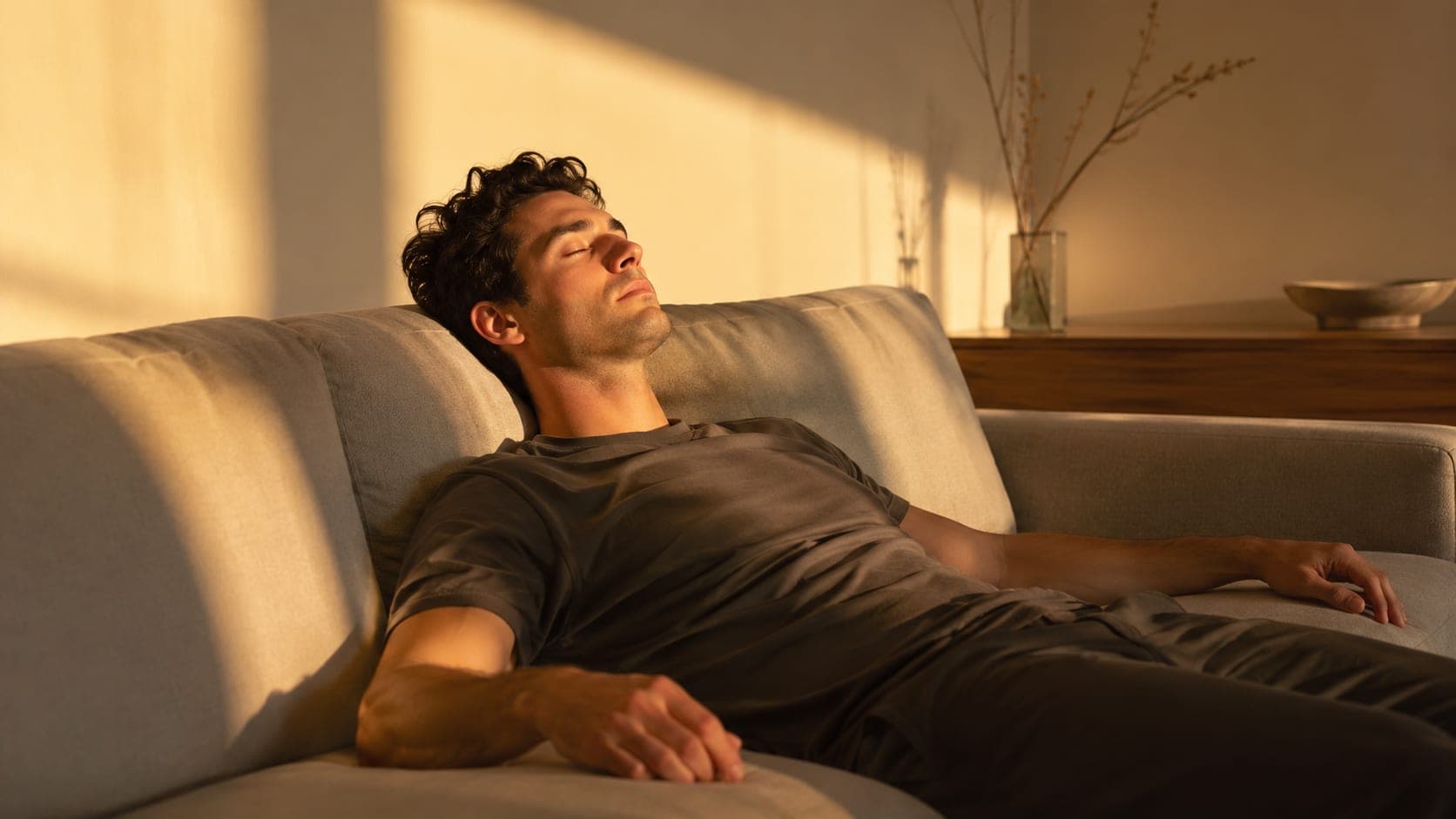
This explains a pattern that confuses almost everyone who struggles with sleep: falling asleep easily on the couch, in a car, at a desk, anywhere except the bedroom. The couch has not been conditioned. The bed has. The problem is not the inability to sleep. It is a Pavlovian response trained one restless night at a time.
The bed is not neutral territory. It is a stimulus. And that stimulus has been telling your body the wrong thing for a long time.
The harder you try, the further away it gets
Sleep is one of the only biological processes that actively retreats from direct effort. The harder you pursue it, the more activation you produce. And activation is exactly what sleep requires you to stop.
Harvey, A. G. (2002). A cognitive model of insomnia. Behaviour Research and Therapy.
Allison Harvey's cognitive model identified the central role of sleep-related worry in maintaining sleeplessness. The person who cannot sleep monitors their own state obsessively: how long have I been awake, how many hours do I have left, I need to sleep now or tomorrow will be ruined. Each thought activates the prefrontal cortex and the amygdala. Which recruits the HPA axis. Which releases cortisol. Which delays sleep further.
The attempt is the obstacle. Not philosophically. Neurologically. The monitoring circuitry and the sleep initiation circuitry are in direct competition. Running both simultaneously is not possible. The moment you start observing whether you are asleep, you are not asleep.
Sleep effort (activates)
- Calculating hours left until alarm
- Trying to relax on command
- Monitoring whether it is working
- Counting breaths with intent
- Waiting for sleep to arrive
Sleep drift (permits)
- Letting the mind wander uncontrolled
- Reading paper until eyelids give up
- Losing track of what you were thinking
- Comfortable body, disengaged mind
- Forgetting sleep is the goal
I need to try harder to fall asleep.
I need to send different signals so my body can permit sleep.
Effort activates arousal. The four signals that determine sleep permission (light, temperature, cognitive load, and conditioned associations) all operate before you get in bed. Trying at 11pm is trying at the wrong hour.
Temperature is the gateway nobody uses
Before sleep can begin, core body temperature must drop by approximately one to two degrees Fahrenheit. This is not a side effect of sleep. It is a prerequisite. The body achieves this through distal vasodilation: blood vessels in the hands and feet dilate, routing warm blood to the skin surface where it radiates heat away from the core. Hands and feet warm up. Core cools down. Sleep begins.
Kräuchi and colleagues published a study in Nature in 1999 that demonstrated this with unusual directness. Subjects who wore heated socks to bed fell asleep significantly faster than those who did not, not because warmth is soporific, but because warming the feet triggered the vasodilation response that accelerated core cooling.
Stress activates the sympathetic nervous system. The SNS produces vasoconstriction: blood vessels in the extremities narrow as part of the threat response. Heat cannot dissipate from the core. Body temperature stays elevated. The thermal gate for sleep remains closed, regardless of how much adenosine has built up or how precisely the circadian signal is timed. Exhaustion and timing are both correct. The temperature condition is simply not met.
- Staying in bed longer hoping sleep eventually arrives, which reinforces the conditioned arousal between bed and wakefulness
- Checking the clock to calculate remaining sleep time, which activates monitoring circuitry and triggers cortisol release
- Having a glass of wine to relax, which suppresses REM sleep architecture and fragments the second half of the night
- Scrolling until you feel tired, since blue light delays melatonin and the 'tired' feeling from screens is eye fatigue, not sleep pressure
- Taking melatonin to force unconsciousness, since melatonin signals safety, not sleep onset, and does nothing against an active arousal system
The five levers that actually change the arousal signal
The 20-minute rule
If you are not asleep within 20 minutes of lying down, get up. Sit somewhere dim and do something low-stimulation, reading on paper, quiet stretching, nothing with a screen. Return only when genuinely sleepy, not just tired. Short-term this feels wrong. Long-term it is the most evidence-supported behavioral intervention for breaking conditioned arousal between bed and wakefulness. Stimulus control therapy built on this principle outperforms sleep medication in most long-term studies.
High impactWarm bath 60 to 90 minutes before bed
A warm bath or shower taken 60 to 90 minutes before sleep triggers a compensatory core cooling response. As skin temperature rises during the bath, the body increases heat dissipation. When you step out, core temperature drops faster than it would otherwise. Sleep onset accelerates. The timing is not arbitrary: too close to bed and the cooling effect has not had time to complete. Too early and the benefit dissipates.
High impactThe brain dump
Racing thoughts at 2am are almost always tomorrow's unfinished business being actively tracked by working memory. Writing them down as a concrete task list, not journaling, not reflection, just a plain list of what needs to happen, transfers the tracking burden from your prefrontal cortex to paper. Research on worry postponement shows this reduces pre-sleep cognitive arousal significantly more than attempting to suppress the thoughts directly.
High impactThe cortisol window closes at 9pm
What you do before 9pm matters more than any sleep ritual at 11pm. Vigorous exercise after 7pm delays cortisol clearance by two to three hours. Bright overhead lighting after 9pm signals the brain it is still midday. These are the two most common drivers of nocturnal cortisol elevation, and both require action hours before bedtime, not minutes. The sleep routine starts at dinner, not at the bedroom door.
CriticalCaffeine has a longer shadow than you think
Caffeine has a five to seven hour half-life. A 3pm coffee is still active at 10pm at a level high enough to block adenosine receptors and delay sleep onset. For anyone with a hyperarousal pattern, cutoff should be noon or earlier. This is not paranoia. It is receptor pharmacology. Individual sensitivity varies, but the half-life does not.
High impactPeople who fall asleep fastest report thinking about nothing in particular, not relaxation techniques, not breathing counts, just an unfocused mental drift. The absence of directed thought is the actual mechanism. Every sleep technique ever designed is simply a structured way of arriving at that drift without trying to arrive at it.
The 20-minute rule in practice
The instruction 'get out of bed if you cannot sleep' sounds simple and is almost never followed correctly. This is the specific sequence.
The 20-minute rule protocol
20 min- 1Notice the passage of time without checking the clock. If you feel restless for what seems like more than 20 minutes, that is enough.
- 2Get out of bed. Do not lie there hoping it will change. Every additional minute is training the wrong association.
- 3Go to another room if possible, or at minimum sit somewhere that is not the bed. Keep the light dim and warm.
- 4Do something quiet, low-stimulation, and not on a screen. Read on paper. Fold laundry. Sit in the dark and breathe.
- 5Wait for genuine sleepiness. This is different from tiredness. Sleepiness means your eyes want to close on their own, not that you feel exhausted.
- 6Return to bed only when sleepy. If you are not asleep in another 20 minutes, get up again. This is not punishment. It is reconditioning.
What recovery actually looks like
A realistic four-week timeline with consistent application
- Week 1Expected
The 20-minute rule feels counterintuitive. You may sleep less total time initially because you are up longer. Cortisol has not yet re-regulated. Trust the process.
- Week 2Patience
Sleep onset begins to shorten on some nights. The frustration of getting out of bed decreases. Cognitive arousal at bedtime often reduces first, before physical relaxation catches up.
- Week 3Patience
The association between bed and sleep starts to re-form. Nights become less predictable in a good way: some nights are effortless, others still difficult. Trend is downward on wake time.
- Week 4 and beyondVisible result
Most people with conditioned insomnia see substantial reduction in sleep onset time. Anxiety about sleep decreases first, then sleep itself follows. Full CBT-I benefit is typically visible by week 6 to 8.
When this becomes something to see a specialist about
Most acute insomnia resolves on its own or with the behavioral levers described above. Some does not. A subset of chronic sleep problems has causes that behavioral change alone cannot reach, and knowing when to seek clinical evaluation is part of taking sleep seriously.
The problem was never sleep
Insomnia is typically described as an inability to sleep. The framing is wrong in a way that matters. Sleep is not absent. It is being actively prevented by a system that has concluded the current environment is unsafe. The arousal system is not malfunctioning. It is doing exactly what evolution designed it to do: maintaining alertness when threat signals are present. The problem is that cortisol, conditioned associations, and artificial light all read as threat signals to a brain that developed in a very different world.
Four levers control the arousal signal: light, temperature, cognitive load, and conditioned associations. Each one sends a message. The arousal system reads all four simultaneously, and it responds to signals, not intentions. Managing those signals hours before bedtime produces more change than any ritual performed in the last ten minutes before lying down.
You are not a nervous system that has forgotten how to sleep. You are a nervous system that has received too many stay-alert instructions for too long.
That changes. Slowly, predictably, and without the effort that has been making it worse.
→Related readingWhy You Wake Up Anxious: The Cortisol Awakening Response ExplainedSleep science, without the supplement ads
Join GetClariSync for evidence-based sleep and wellness research delivered directly.
Get the newsletterGetClariSync Sleep Desk
Editorial Research · Sleep Science
The GetClariSync Sleep Desk reviews peer-reviewed research in sleep science, chronobiology, and circadian medicine. We focus on journals indexed in PubMed — including Sleep, Sleep Medicine Reviews, Nature Communications, the Journal of Sleep Research, and the Journal of Clinical Sleep Medicine. Each article cites its primary sources, distinguishes correlational findings from causal evidence, and is reviewed for accuracy before publication. We update articles when stronger evidence emerges and post a correction note when we change a substantive claim. We are editorial researchers, not clinicians — for medical concerns, sleep disorders, or persistent insomnia please consult a board-certified sleep physician or your primary care provider.