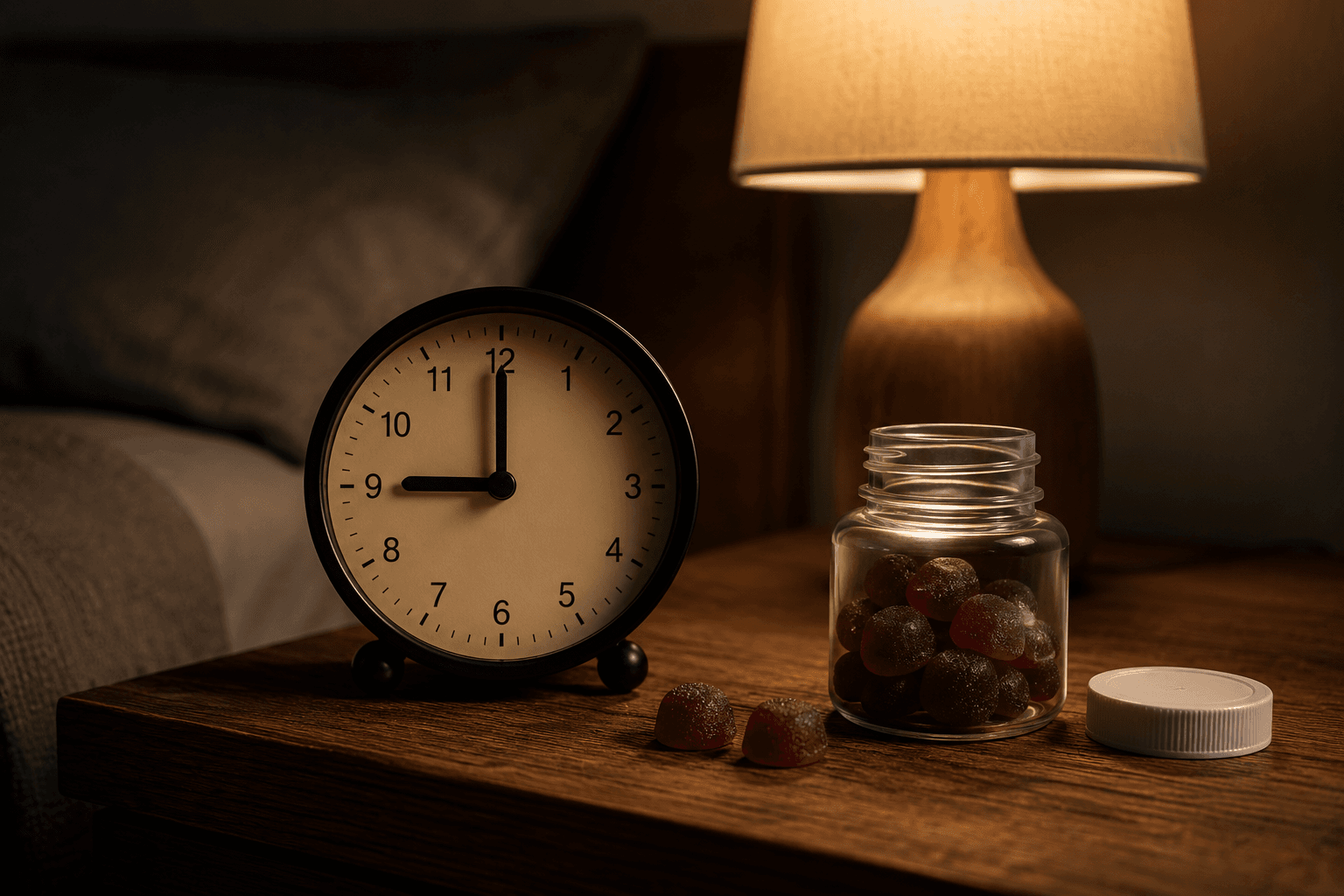
You woke up with a dream still in your head. It was vivid, complete, charged with something specific. You meant to tell someone about it. By the time you reached the kitchen the dream was gone. Not blurred. Not partial. Gone.
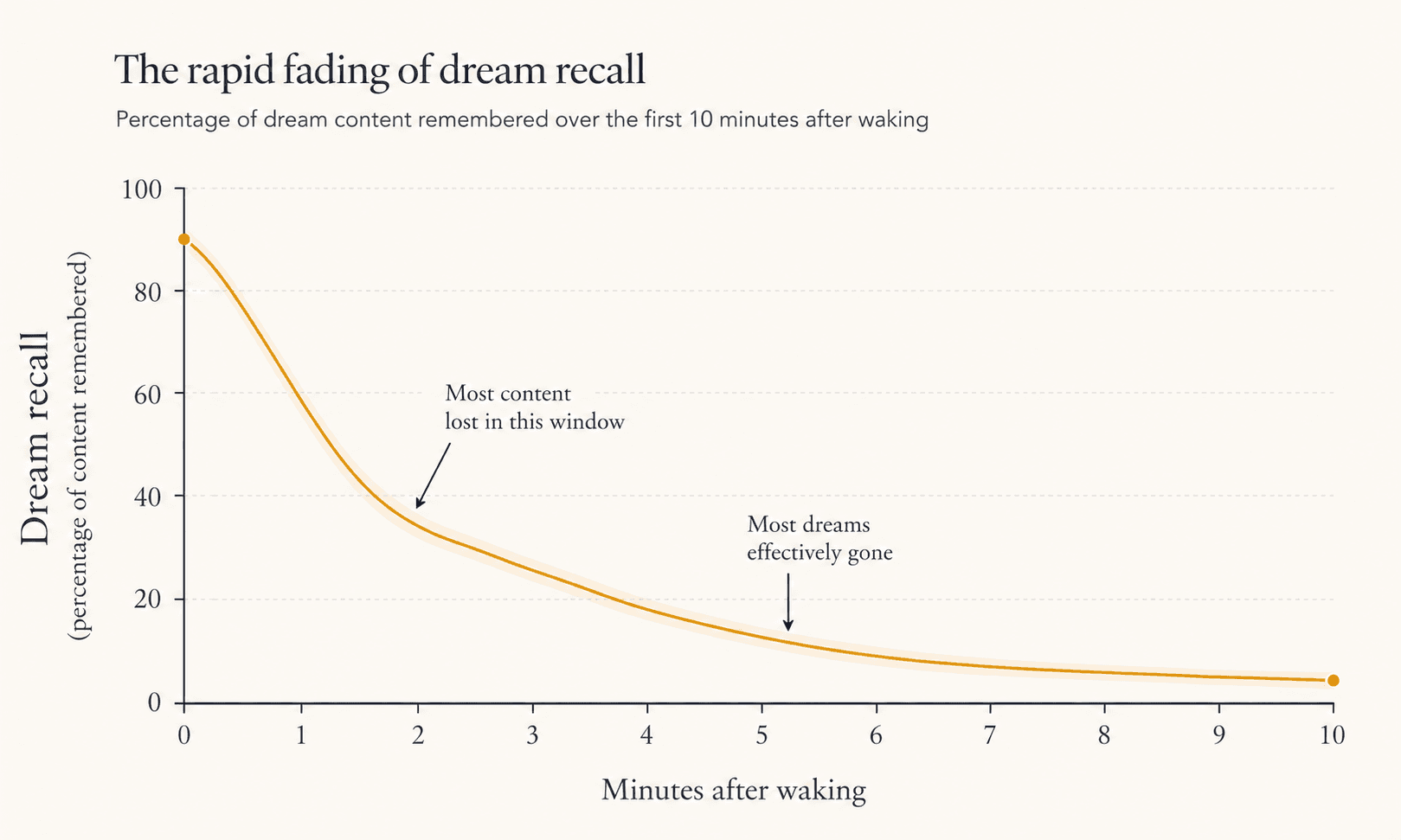
Most dream content disappears from memory within the first few minutes of being awake. The forgetting is not random or gradual. It is the result of a specific chemical state change at the moment of waking. During REM sleep, when most vivid dreams occur, the brain runs on a chemistry that does not write new experiences into long-term memory. The instant you wake, that chemistry switches back on, and the new sensory input quickly overwrites the dream in working memory. The dream was never fully filed. It was only briefly held.
It happens almost every morning. You wake up holding a fragment of something. A scene, a face you knew but cannot place, an emotion that feels like it has just happened. You think you will remember this one. You sit up. You check your phone. You start to move. You go to write the dream down and the dream is not there. The feeling is still hanging in the room, but the content has dropped through the floor.
This is not bad memory. The dream is not buried somewhere you could find it. The dream was never stored in the form that memory can retrieve.
What a Dream Is Doing Inside the Brain
Most vivid dreams happen during a stage called REM sleep, named for the rapid eye movements that occur during it. The brain during REM is in a paradoxical state. It is highly active, in some regions more active than during waking, but it is doing something very different from what it does when awake. The hippocampus, the structure responsible for writing new declarative memories, is busy during REM but its activity is internal. It is replaying earlier experiences, consolidating older memories, sorting through what to keep. It is not encoding the dream content as a memory of an event that just happened. The dream is being experienced. It is not being recorded.
What Happens at the Moment You Wake
The instant you become awake, a chemical shift begins. The wake state has its own neuromodulatory profile, and within seconds of opening your eyes the brain has switched from sleep chemistry to wake chemistry. The hippocampus is back online for encoding the experience you are now having. The experience available for encoding is whatever you are doing, seeing, and thinking right now.
The dream content, which had been held loosely in working memory during the wake transition, is being competed against by every new sensory input. The alarm sound. The light through the curtains. The feeling of the mattress. The first thought about the day. None of this is in the dream. All of it is in the dream's encoding space. Within seconds the dream is being overwritten before it can be transferred anywhere more durable.
What the Chemistry of REM Is Actually Doing
A canonical review of memory and sleep examined what specific neurochemical conditions are required for an experience to be transferred from working memory into long-term storage, and whether the brain state during REM sleep meets those conditions.
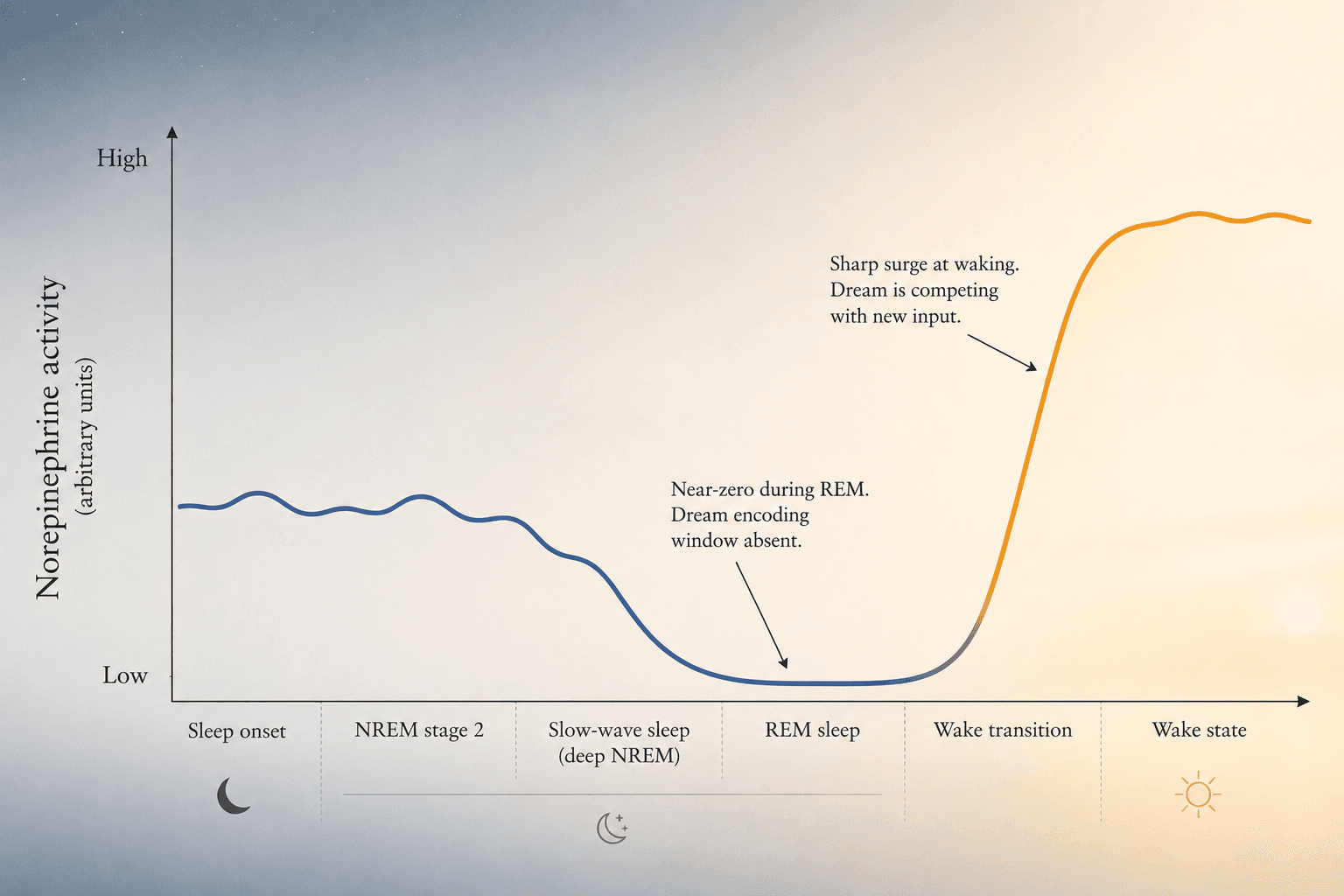
“The neurochemical environment of REM sleep, particularly the near-absence of noradrenergic and serotonergic activity, is fundamentally different from the wake state in which long-term memory encoding occurs. Material experienced during REM is not consolidated into declarative memory by the same mechanisms that consolidate waking experience.”
What this confirms is that the dream was never written to long-term memory by any of the usual processes. The brain was building the dream in a chemistry that does not save what it builds. Norepinephrine, the neuromodulator most essential for encoding new experiences as recoverable memories, is nearly absent during REM. By the time it returns at waking, the dream content is competing with everything new that just arrived in the brain. The forgetting is not a failure of memory. It is the absence of the conditions that would have made remembering possible.
Why Some Dreams Stick and Most Don't
A small fraction of dreams are remembered. The conditions that allow this are specific. Dreams that contain strong emotional content trigger amygdala activity that produces a tag the hippocampus can use even in the dream-state chemistry. Dreams that occur in the final REM cycle of the night, just before natural waking, are closest to the encoding state and have a slightly better chance of being held in working memory long enough to be re-encoded. Dreams from which you wake suddenly, rather than slipping out gradually, tend to be held more clearly because the transition catches the content before it has begun to compete with new sensory input.
Lucid dreams, in which the dreamer becomes aware they are dreaming, occupy a different position because partial wake-state chemistry comes online during the dream itself. Recall rates for lucid dreams are higher because the encoding system was partially active during the experience. Most ordinary dreams have none of these conditions. They are vivid while being experienced and gone within minutes of waking, not because they were not real, but because they were never written down.
By the time you have stepped out of bed and walked to the bathroom, most of what you dreamed is already inaccessible. The dream you can sometimes recall an hour later was held by emotion, by an interrupted REM cycle, or by your immediate attention catching it before competing thoughts arrived. Most mornings, all three conditions miss.
What Helps if You Want to Remember
Most reliable dream recall practices work by reducing what competes with the dream in the moments after waking. Lying still without opening your eyes, not reaching for the phone, not turning on a light, and trying to hold the dream in attention for a few seconds gives working memory more time before sensory input arrives. Writing the dream down immediately is more effective than thinking about it. Speaking the dream aloud reduces drift. The practice is not about retrieving something that has been hidden. It is about transferring something that has been briefly held into a form that survives the chemical shift.
People who keep dream journals tend to remember more dreams over time. This is partly attention training, since the routine of trying to remember on waking primes the brain to catch the dream before it goes. It is partly that the act of writing creates a long-term memory of the dream content even though the original dream-state never wrote one. The journal builds a memory of the dream after the fact, using ordinary wake-state encoding on the still-present working memory copy.
What the Forgetting Is Actually For
There is a useful logic in this design. If every dream were stored as a memory, the brain would carry around a record of thousands of vivid, sensory-rich experiences that did not actually happen, mixed in with the events of real life. The work of distinguishing real from dream would become an active task. The system that filters which experiences are filed and which are released is a quiet protection against confusion.
The next time you wake holding the edges of something you were just inside, it might be worth pausing for a moment before reaching for the phone. The dream is still there for a few seconds. After that, it goes where most dreams go: nowhere recordable. Not because it did not matter. Because the system was never set up to keep it.
Want to go deeper on sleep science?
Read our breakdown of NSDR, the 20-minute non-sleep deep rest practice that restores dopamine and focus better than a nap.
Explore Sleep ScienceGetClariSync Sleep Desk
Editorial Research · Sleep Science
The GetClariSync Sleep Desk reviews peer-reviewed research in sleep science, chronobiology, and circadian medicine. We focus on journals indexed in PubMed — including Sleep, Sleep Medicine Reviews, Nature Communications, the Journal of Sleep Research, and the Journal of Clinical Sleep Medicine. Each article cites its primary sources, distinguishes correlational findings from causal evidence, and is reviewed for accuracy before publication. We update articles when stronger evidence emerges and post a correction note when we change a substantive claim. We are editorial researchers, not clinicians — for medical concerns, sleep disorders, or persistent insomnia please consult a board-certified sleep physician or your primary care provider.