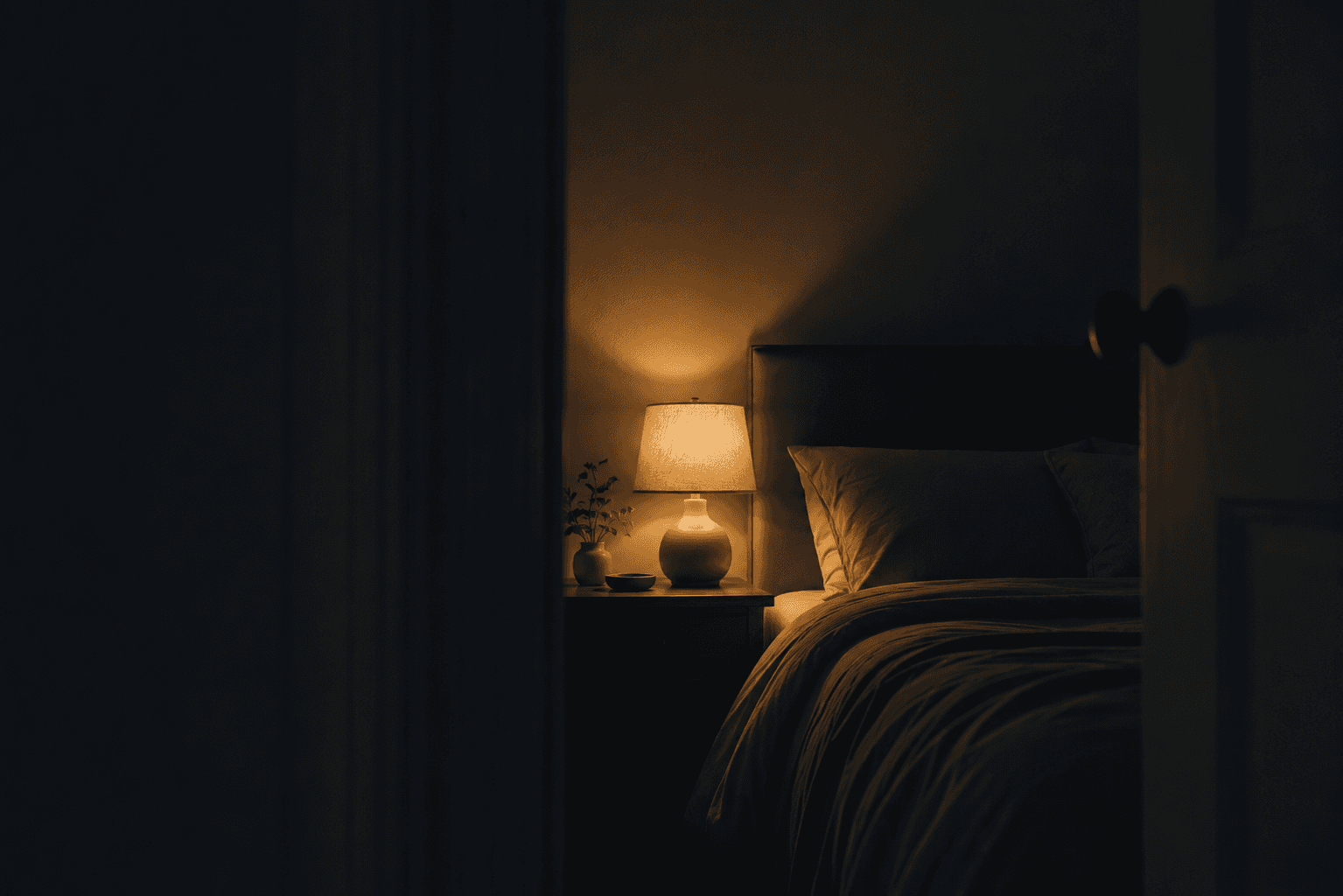
You already know you'll regret it tomorrow. You do it anyway. That contradiction is the entire phenomenon, and it has almost nothing to do with time management.
Revenge bedtime procrastination is the deliberate delay of sleep despite knowing it will cause fatigue the next day, done to reclaim a sense of personal time after a day that felt controlled by other people's demands. Research shows it is not primarily a scheduling failure. A 2014 study introducing the concept found bedtime procrastination correlates with lower general self-regulation, not poor planning, and a 2016 follow-up confirmed the pattern in the general population, directly linking it to reduced total sleep. Because the core driver is depleted self-regulation and a missing sense of autonomy earlier in the day, advice to simply set an earlier bedtime rarely works. What helps is protecting a small window of genuinely unclaimed time during the day, and moving the bedtime decision to a moment when self-regulation is still intact, rather than relying on willpower at the exact moment it is weakest.
It is 11:47 at night. The alarm is set for 6. There is no reason to still be awake, and a very good reason to be asleep already, and yet the phone stays on, another episode starts, another scroll begins. Nobody forced this. Nobody is even enjoying it especially. It happens anyway, night after night, to people who would describe themselves, in every other part of their life, as reasonably disciplined.
The behavior earned a name in 2020, translated from a Chinese phrase describing exactly this: staying up late on purpose, in a kind of quiet defiance, to get back time that the day never gave. What research on the topic had already found, years earlier, is that the explanation most people reach for, poor discipline, bad time management, doesn't match what's actually happening.
This Was Never About Time Management
A research team set out to define this pattern formally and test what actually predicted it. They compared people's tendency to delay bedtime against several possible explanations: general time-management skill, daytime tiredness, and a person's broader capacity for self-regulation, the ability to align actions with intentions even when something more immediately appealing is available.
“Bedtime procrastination was consistently associated with lower general self-regulation, defined as the capacity to align one's actions with long-term goals by managing impulses, emotions, and attention, rather than with deficits in time-management ability.”
That distinction changes what the actual problem is. A time-management problem gets solved with a schedule, an earlier alarm, a stricter cutoff. A self-regulation problem, one that shows up specifically at night, at the exact point in the day when the capacity to resist an impulse is already worn thinnest, does not respond the same way to the same fix.
Why the 'Revenge' Part Is the Real Clue
The word revenge is doing more work in this phrase than it first appears to. It is not aimed at sleep, or at tomorrow's tiredness. It is aimed at a day that felt like it belonged to everyone except the person living it: meetings, caretaking, commuting, other people's deadlines. Bedtime becomes the first unclaimed hour, the first stretch of time with no external demand attached to it, and giving it up on schedule can feel less like healthy discipline and more like surrendering the only part of the day that was actually yours.
Picture a jar that's supposed to fill with a little personal time every day, ten minutes here, twenty there, moments that belong to no one else's agenda. On days when almost nothing gets added to that jar, something in the evening starts insisting it get filled anyway, at the only hour left available, even at the cost of sleep. The behavior isn't irrational once viewed this way. It's a fairly logical response to a jar that stayed empty all day.
The Population-Level Confirmation
The original study focused on university students, a group with unusually flexible schedules. A follow-up asked whether the same pattern held in ordinary working adults, and whether it actually translated into less total sleep, not just a later bedtime that got compensated for elsewhere.
“Bedtime procrastination was found in a general population sample and was directly associated with reduced total sleep time, independent of work obligations or wake time, confirming that the effect was not limited to a student population with unusually flexible schedules.”
Why 'Just Go to Bed Earlier' Doesn't Work
The Protocol: Fix the Day, Not Just the Night
Protect ten unclaimed minutes before evening, on purpose
A short window of time with no assigned task, taken sometime during the afternoon rather than after 10pm, reduces the pressure that builds toward reclaiming it later at a worse cost. It doesn't need to be long. It needs to be genuinely unclaimed, not another item on a to-do list disguised as rest.
High impactDecide the cutoff earlier in the day, not at the moment itself
Set a specific, concrete plan while self-regulation is still intact: at 10:30, the show pauses and the phone charges outside the bedroom. Deciding this at 7pm succeeds far more often than deciding it at 11:40pm, because the decision no longer has to be fought for at the exact hour willpower is lowest.
High impactMake the impulsive option physically less available
Charging a phone in another room, or setting a streaming app to require an extra step to reopen, doesn't require more discipline in the moment. It simply removes the option from arm's reach at the exact time arm's reach is all that's deciding anything.
High impactWhen It's More Than a Habit
Occasionally staying up too late is a near-universal experience, not a disorder. It becomes worth a closer look when it's consistent, severe, or paired with other signs that something deeper than a bedtime habit is involved.
Most nights, though, this isn't a deeper disorder. It's a fairly ordinary response to a day that left no room of its own, showing up at the one hour that still felt negotiable. The fix was never a stricter bedtime. It was giving some part of the day back before the day was already over.
It was never a scheduling problem. It was the only hour of the day nobody else had already claimed.
Science-Backed Wellness, Weekly
Research summaries on sleep, focus, and behavioral science: the mechanisms most wellness content skips over.
Get the weekly dispatchGetClariSync Sleep Desk
Editorial Research · Sleep Science
The GetClariSync Sleep Desk reviews peer-reviewed research in sleep science, chronobiology, and circadian medicine. We focus on journals indexed in PubMed — including Sleep, Sleep Medicine Reviews, Nature Communications, the Journal of Sleep Research, and the Journal of Clinical Sleep Medicine. Each article cites its primary sources, distinguishes correlational findings from causal evidence, and is reviewed for accuracy before publication. We update articles when stronger evidence emerges and post a correction note when we change a substantive claim. We are editorial researchers, not clinicians — for medical concerns, sleep disorders, or persistent insomnia please consult a board-certified sleep physician or your primary care provider.