Your partner mentions it before you're even fully awake. A grinding sound, sometime around three, loud enough to wake them but not you. Or maybe nobody has to tell you: your jaw already announced it, tight and faintly sore before your feet even hit the floor.
The default explanation is stress, delivered with a shrug, as if "you're stressed" were a complete answer. It isn't. Grinding your teeth in your sleep is not a vague overflow of tension. It's the last, visible step in a specific, measurable sequence that starts somewhere else entirely: your brain, seconds before your jaw ever moves.
The Four Seconds Before Your Jaw Moves
Sleep isn't the flat, uninterrupted state it feels like from the inside. Every hour, your brain and nervous system briefly flicker back toward wakefulness, dozens of times, in bursts too short to remember. Researchers call these micro-arousals: a few seconds of heightened brain and heart activity, then back down. Most of them come and go without any physical event attached to them at all.
To find out what was actually happening around grinding episodes specifically, researchers monitored people with sleep bruxism overnight using simultaneous brain wave, heart rate, and jaw muscle recordings, timing each measurement against the exact moment grinding began.
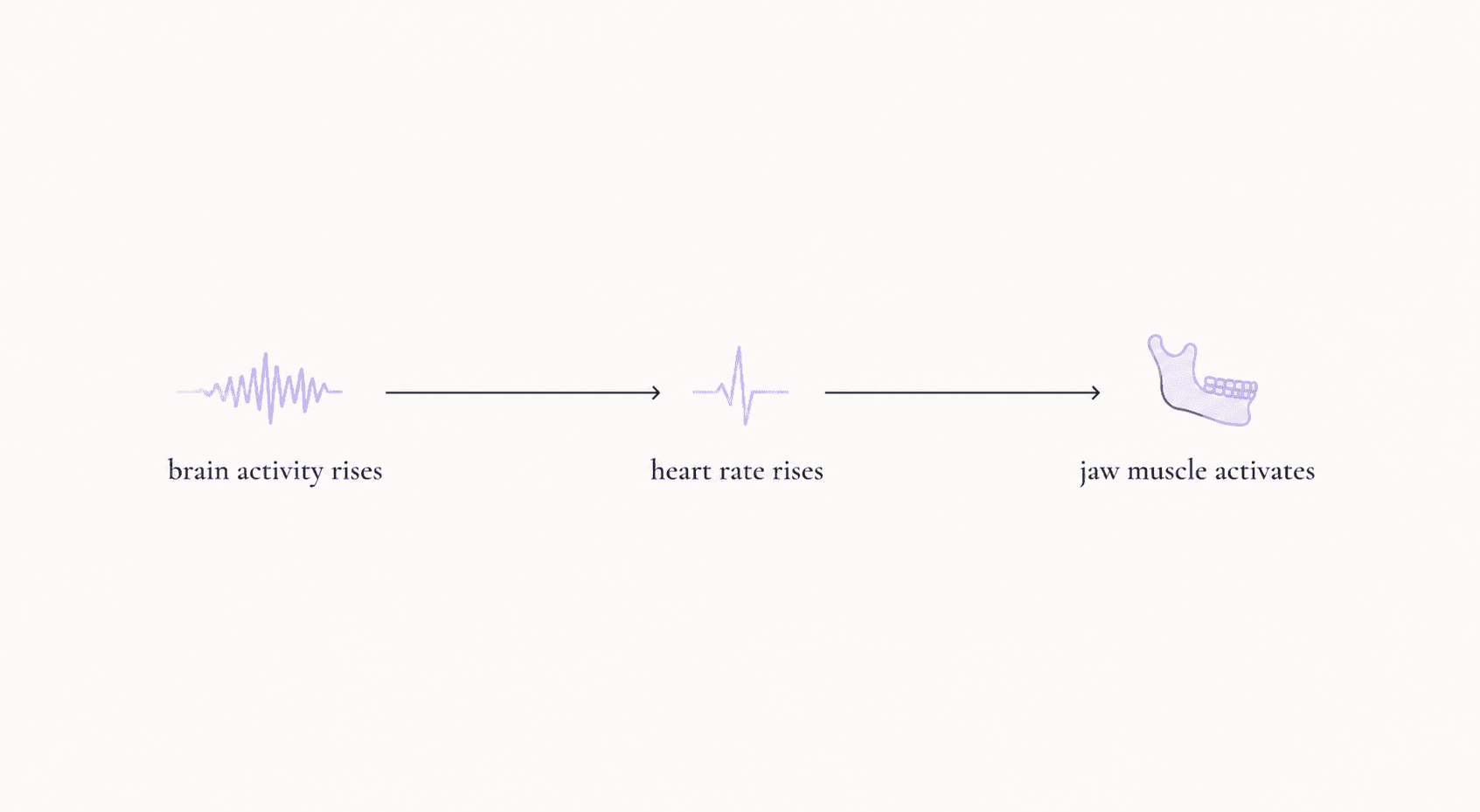
In the large majority of episodes, cortical brain activity spiked about four seconds before the jaw muscles engaged. Heart rate had already started accelerating a full beat earlier than that. The grinding wasn't the event. It was the tail end of one, arriving after the brain and heart had already reacted to something.
Why Cortisol Keeps Showing Up in This Research
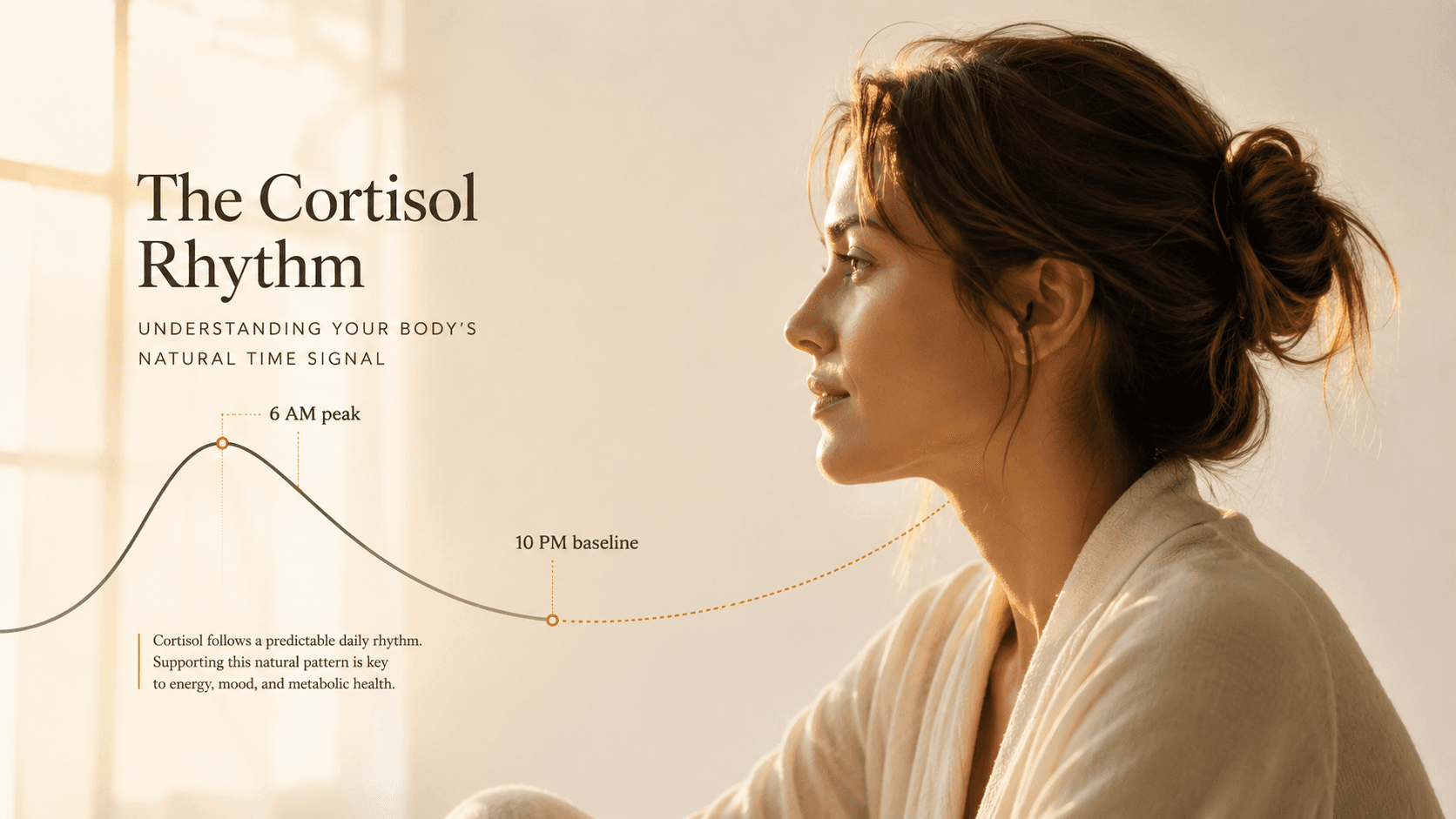
If grinding is downstream of an arousal event, the obvious next question is what's driving the arousal in the first place. One consistent thread across the research is stress hormone activity, measured directly rather than assumed.
A pooled analysis combined data from multiple studies comparing salivary cortisol levels, sampled directly from saliva, between people diagnosed with bruxism and people without it.
People with bruxism consistently showed higher salivary cortisol than people without it. That's not proof that cortisol single-handedly causes every grinding episode. It's a real, measured biological thread connecting a stress hormone most people only associate with daytime anxiety to something happening entirely while they're unconscious.
→If cortisol keeps coming up in your own research tooWhat Does Cortisol Actually Do? The Stress Hormone ScienceIt's Not Always About Stress
Stress explains a meaningful share of cases, not all of them. Genetics plays a role: bruxism runs in families independent of who's under more pressure. Certain medications, particularly some antidepressants, list jaw clenching as a known side effect. Alcohol and smoking are both associated with more frequent episodes. And one contributor gets missed constantly, because from the outside it looks identical to stress-driven grinding: breathing.
What Actually Helps, and What Only Protects
The interventions with a real, if uneven, evidence base target the arousal cascade or its upstream drivers rather than the teeth themselves.
One small pilot study from 2011, published in a clinical psychopharmacology journal, followed eighteen people taking magnesium supplementation and reported fewer, less intense grinding episodes. It's a genuinely interesting early signal. It's also uncontrolled, unreplicated, and far too small to build a confident recommendation on. Worth knowing about. Not worth expecting.
A more heavily studied approach uses biofeedback: a sensor detects jaw muscle activity during sleep and delivers a mild stimulus the instant grinding starts, aiming to interrupt the episode before it fully develops.
·2018·Journal of Oral RehabilitationThe evidence is genuinely mixed: several nights of use show a measurable reduction in episodes, but the effect is inconsistent between studies and nobody has good long-term data yet. It's a legitimate option to discuss with a dentist or sleep specialist, not a guaranteed fix.
A Realistic Evening Routine
- 1Unclench on purpose Rest your tongue on the roof of your mouth, teeth apart, lips closed. Hold that relaxed position for a minute or two while doing something else, like reading.
- 2Warm compress on the jaw hinge A few minutes of heat just in front of the ear, where the jaw joint sits, relaxes the muscle before sleep rather than after damage is already done.
- 3Cut evening alcohol and late caffeine Both are independently associated with more frequent grinding episodes, on top of whatever they're already doing to your sleep.
- 4Treat the daytime stress, not just the bedtime symptom If cortisol is part of the chain, the highest-leverage changes happen hours before you're anywhere near a pillow.
The jaw doesn't clench for no reason. It's usually the most honest reporter of a stressful stretch the rest of the body already tried to forget.
None of this makes a night of grinding something to panic about. It makes it something worth listening to. A jaw doesn't clench for no reason at four in the morning. Somewhere, seconds earlier, something in your brain already decided the night wasn't as quiet as it looked.
GetClariSync Body Desk
Editorial Research · Sports & Movement Science
The GetClariSync Body Desk reviews research in exercise physiology, recovery science, and sports nutrition. We follow journals including Medicine & Science in Sports & Exercise, the Journal of Applied Physiology, the British Journal of Sports Medicine, and the European Journal of Applied Physiology. We separate findings from trained-athlete populations from those relevant to recreational readers, and we flag when transferring a protocol across populations is unsupported. We are editorial researchers, not certified trainers, physiotherapists, or sports physicians — please consult a qualified professional before starting new exercise programs, especially with existing injuries, pregnancy, cardiovascular conditions, or chronic disease.