The most important finding about cortisol and food is not any single food.
The clinical research on cortisol and food supports two variables more than any single ingredient. Dietary pattern (Mediterranean-style eating shows the most consistent evidence) and meal timing (morning cortisol peak aligns with protein-forward breakfast, evening cortisol low aligns with lighter dinners). Individual foods with direct clinical trial evidence for cortisol reduction include omega-3 rich fatty fish, ashwagandha extract, and daily vitamin C. This guide leads with a practical grocery list and a morning-evening plate framework you can execute this weekend, then explains why the pattern and timing matter, then covers the foods that quietly raise cortisol, and handles the TikTok cortisol detox trend honestly at the end.
You have probably read at least ten articles about cortisol-lowering foods, and you probably left more confused than when you arrived. Twelve breakfasts that shrink your waistline. Fifteen foods with names of enzymes attached. Matcha cocktails that reset your rhythm. Almost none of them separated which foods have direct clinical evidence from which are marketing dressed as science.
This article does the opposite of the standard approach. The practical framework comes first, so you can screenshot the grocery list, apply the plate rule this evening, and stop reading if that is all you needed. The sections that follow explain why the framework holds up in research, which foods have real trial evidence, and which behaviors quietly undermine your cortisol rhythm without appearing on any wellness list. Both parts have value. Neither wastes your time.
The TikTok cortisol detox trend gets addressed near the end because the practical framework matters more than the correction. If the trend is what brought you here, feel free to jump ahead. Then come back for the parts you skipped.
The practical framework you can use this week
Two decisions carry most of the weight. What breakfast and dinner look like on your plate. What is in your kitchen when you go to make them. Get those two right for a couple of months and the rest becomes optional refinement.
The morning and evening plate rule
Build breakfast around protein and healthy fat with moderate whole-grain carbs. Build dinner around fiber and lean protein with reduced refined carbs. That is the entire rule.
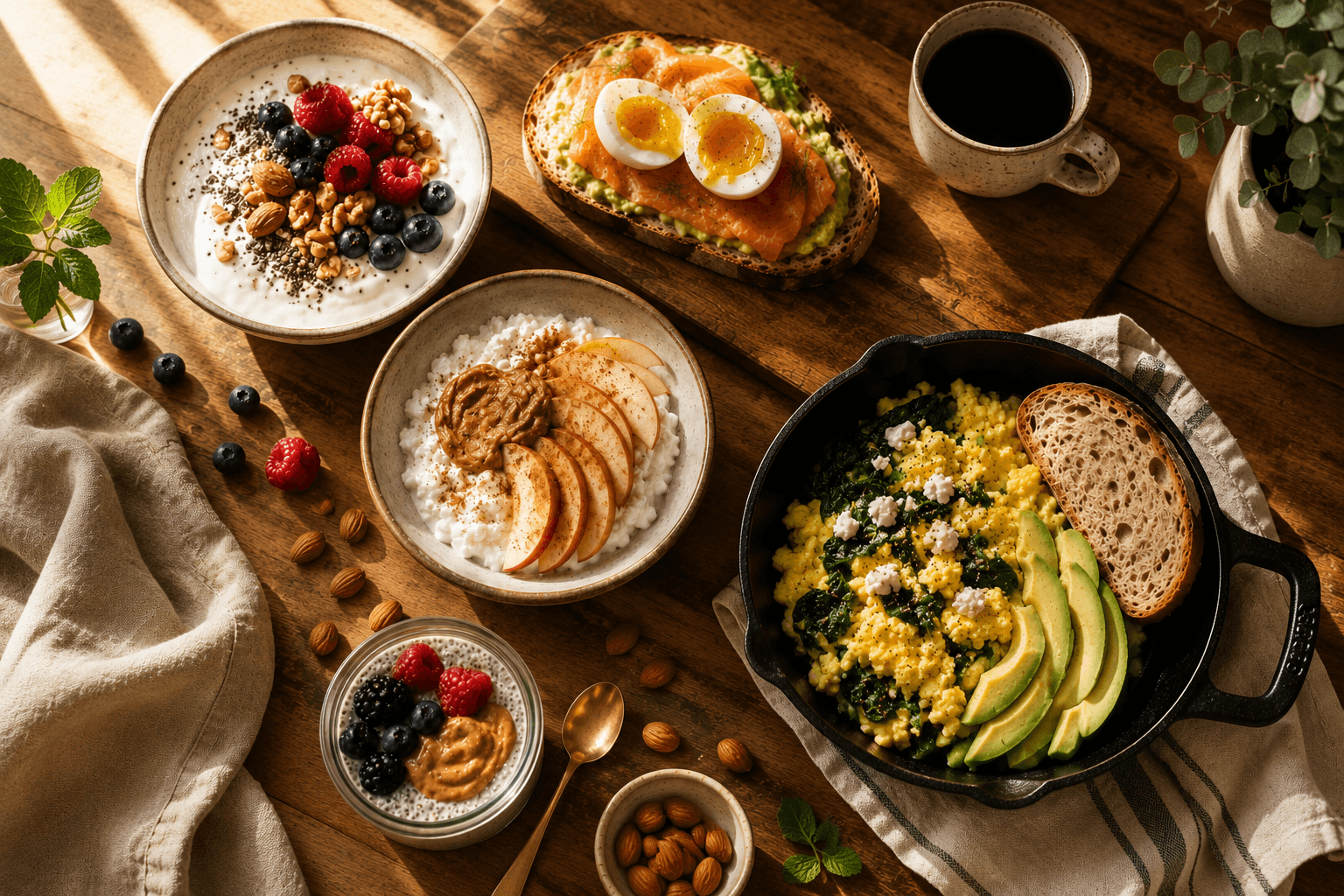
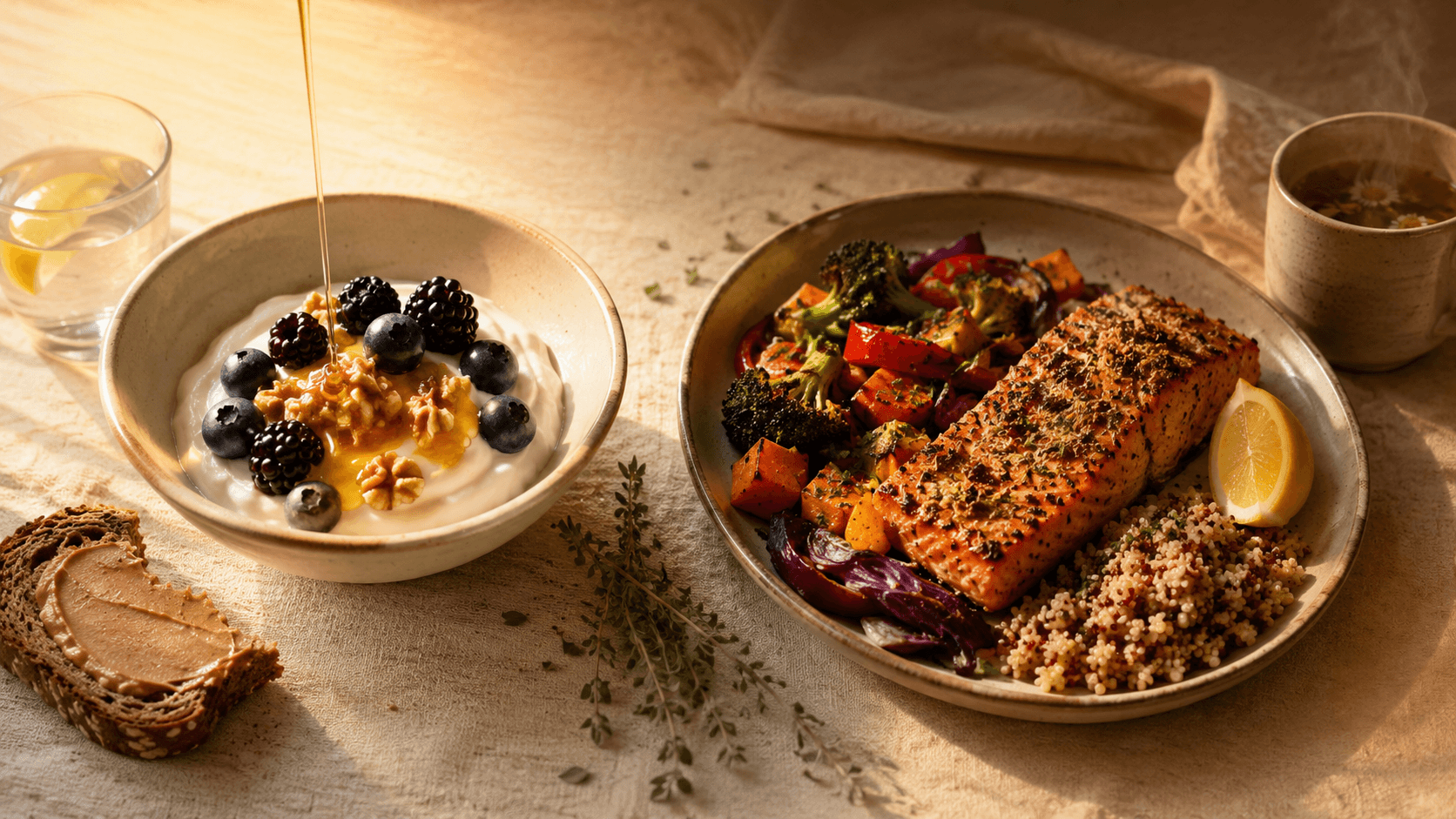
Cortisol-supportive breakfast examples: Greek yogurt with berries and walnuts. A two-egg vegetable scramble with a slice of whole-grain toast and olive oil. Overnight oats with almond butter, chia, and berries. Nothing exotic. Nothing overpriced. The point is protein and satiety early, aligned with the natural morning cortisol peak.
Cortisol-supportive dinner examples: Baked salmon with roasted vegetables and a small portion of quinoa. Lentil and vegetable soup with a side salad and olive oil. Chicken and vegetable stir-fry over a modest scoop of brown rice. Boring on purpose. Repetition is the friend of consistency, and consistency is what actually moves cortisol.
The grocery list
The list below makes the breakfasts and dinners above possible without thinking. Screenshot it. Take it to the store this weekend. Rotate variety within categories rather than shopping for exotic items you will use once.
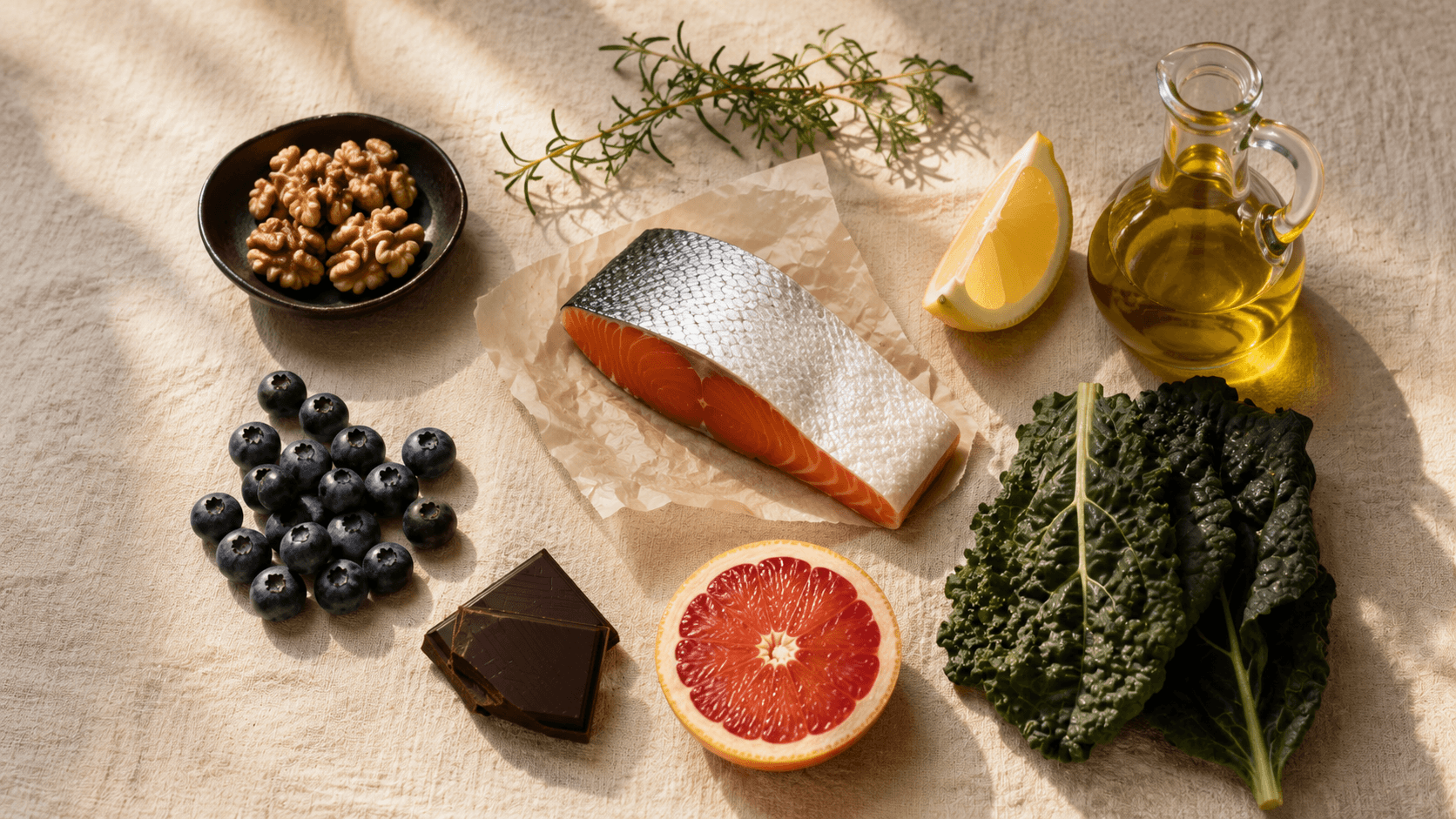
- Fatty fish twice a week (salmon, sardines, mackerel) for direct omega-3 evidence
- Extra-virgin olive oil as your primary cooking and dressing fat
- Two to three colors of vegetables per meal (leafy greens, cruciferous, root, orange, red)
- Legumes at least three times per week (lentils, chickpeas, beans) for fiber and satiety
- Whole grains that are actually whole (steel-cut oats, farro, brown rice, quinoa) not processed cereals
- Fresh fruit daily, especially berries, citrus, and stone fruit for polyphenols
- Nuts and seeds in small daily portions (walnuts, almonds, pumpkin seeds, chia)
- Fermented foods a few times a week (plain yogurt, kefir, kimchi, sauerkraut)
- Herbs and spices used generously (turmeric, garlic, rosemary, oregano, cinnamon)
- Dark chocolate 70 percent or higher, 20 to 30 g portion, three to four times a week if desired
- Green or oolong tea in place of a second coffee
- Vitamin C food sources (citrus, bell peppers, kiwi, broccoli) daily
Meal timing changes tend to produce noticeable energy and sleep improvements within two to three weeks. Dietary pattern shifts show effects on abdominal composition and morning energy over eight to twelve weeks. Structural cortisol rhythm recovery in someone with chronic dysregulation typically takes three to six months of consistency. If you are hoping for a one-week transformation, no evidence supports that timeline. If you are willing to hold the pattern for a season, the evidence does support meaningful improvement.
That is the useful part. If you needed only the practical framework, you have it. The sections that follow explain why the pattern beats individual foods, why timing matters as much as content, which specific foods carry the strongest evidence, and which behaviors quietly work in the wrong direction. Each section will make you more likely to keep the framework long enough to see it work.
Why the pattern matters more than any single food
The strongest and most reproducible finding in the food-cortisol literature is not about any specific ingredient. It is about the overall pattern of eating.
A diet heavy in ultra-processed food, refined grains, added sugar, and industrial seed oils has been consistently associated with higher circulating cortisol and greater visceral fat. A diet built around vegetables, fruits, whole grains, legumes, olive oil, fatty fish, nuts, and moderate dairy has been associated with lower cortisol and healthier fat distribution.
That second pattern has a name. It is the Mediterranean pattern, and it has decades of research support for cardiovascular, metabolic, and cognitive outcomes. Its effects on cortisol are less well known but consistent enough that most stress-focused clinicians who work with food default to it.
A single food added to a broken pattern rarely produces measurable cortisol change. A pattern shift produces measurable change even when the specific foods vary week to week. This is why one week of dark chocolate does not reset your rhythm, but two months of eating vegetables, fatty fish, and whole grains at consistent times often does. The pattern is the mechanism. Individual foods are the ingredients that make the pattern possible.
This reframe frees you from chasing whichever superfood is trending this month. It also frees you from the guilt of not having every recommended item in the pantry. If the overall pattern is Mediterranean-adjacent, small variations across weeks make little difference. Consistency of pattern beats perfection of ingredients.
Why the timing of meals changes the response
Cortisol is not a single number. It is a curve. Levels rise sharply in the first hour after you wake up. They descend steadily through the day. They reach their lowest point in the middle of the night. That rhythm is why you feel alert in the morning, functional in the afternoon, and, in a healthy nervous system, calm in the evening.
Meals interact with that rhythm. The same meal produces different cortisol and glucose responses depending on when you eat it. A high-carbohydrate dinner and a high-carbohydrate breakfast are not equivalent to your endocrine system. Late meals worsen glucose control and correlate with higher next-morning cortisol. Morning meals synchronize with the natural cortisol peak and support a healthier decline through the day.
| Time of day | Cortisol context | Meal composition that supports the rhythm |
|---|---|---|
| Waking to 9 AM | Cortisol peaks 30 to 45 minutes after waking (the cortisol awakening response) | Protein-forward breakfast, some healthy fat, moderate whole-grain carbs, minimal added sugar |
| 9 AM to 12 PM | Cortisol descends from morning peak, energy demands high | Continue protein-forward eating, add fibrous vegetables, hydrate consistently |
| 12 PM to 6 PM | Steady decline continues, energy stabilization matters most | Balanced plate: protein, fiber-rich carbs, healthy fats, colorful vegetables |
| 6 PM to 9 PM | Cortisol approaches its lower range, body preparing for rest | Lighter dinner, reduced refined carbs, minimal alcohol, no large late meals |
| 9 PM onward | Cortisol at its lowest, growth hormone rising, digestion slowing | Ideally no eating after this point, or a small protein-fat snack if truly needed |
One specific finding deserves its own mention because it appears in nearly no cortisol food article. Skipping breakfast entirely, especially in women, has been associated with a flattened diurnal cortisol curve. Instead of the sharp morning peak and clean afternoon decline, the curve becomes muted and irregular. That flattening is the same pattern seen in chronic stress and shift work, which is not the direction you want your rhythm to move.
·2019·Physiology & BehaviorThis does not mean everyone must eat within thirty minutes of waking. It means that consistent morning eating, aligned with the natural cortisol peak, supports the rhythm in a way that intermittent fasting protocols pushed into the late morning may not.
→The meal timing deep diveChrononutrition: Meal Timing, Chronotype, and Your Circadian RhythmThe evidence hierarchy behind the grocery list
The Mediterranean pattern plus supportive timing does most of the work. On top of that foundation, a small number of specific foods and compounds have direct clinical trial evidence for cortisol reduction. Everything in the strong evidence column has been tested against placebo in randomized trials. Everything in the supportive column has plausible mechanisms and some human data. Everything in the marketing column has been popularized without corresponding trial evidence.
Strong direct evidence
- Ashwagandha extract 300 to 600 mg daily (2025 meta-analysis, 15 RCTs, 873 participants)
- Omega-3 from fatty fish or supplementation 2 to 2.5 g daily (19 percent cortisol reduction over 4 months)
- Vitamin C 1000 mg daily (reduced cortisol in women with chronic stress-related hypercortisolemia)
- Mediterranean dietary pattern (consistent correlation with lower cortisol and healthier abdominal fat)
Supportive mechanisms, limited trials
- Dark chocolate 25 g daily, high polyphenol (one small study showed cortisol reduction)
- Green tea and oolong tea (EGCG and L-theanine mechanisms, some human data)
- Turmeric or curcumin (mixed results, some cortisol reduction in specific populations)
- Fermented foods like kimchi, sauerkraut, yogurt (gut-brain axis support, indirect)
- Magnesium-rich foods like leafy greens, seeds, legumes (supports HPA axis, no direct cortisol trials)
The most robust research on ashwagandha comes from a 2025 systematic review and meta-analysis that pooled 15 randomized controlled trials involving 873 participants. Standardized ashwagandha extract at 300 to 600 mg daily consistently reduced morning cortisol compared with placebo, alongside improvements in perceived stress and anxiety. A separate 12-month safety study published in Phytotherapy Research in 2025 confirmed the extract remained well-tolerated over long-term use without clinically significant hepatic effects.
·2025·Journal of the American Nutrition AssociationAshwagandha is a supplement rather than a food, but it deserves inclusion because it represents the strongest current evidence for a specific compound reducing cortisol in humans. Omega-3 from fatty fish (salmon, sardines, mackerel) delivers the second-strongest evidence, and it is available through eating rather than supplementing. Two servings of fatty fish per week meets most of what the trials used.
The foods that quietly work in the opposite direction
Adding evidence-based foods produces limited benefit if the underlying pattern includes daily cortisol triggers. Reducing those triggers is often more actionable than sourcing exotic superfoods.
- Late-evening large meals, especially high-carbohydrate ones, produce elevated overnight glucose and correlate with higher next-morning cortisol
- Alcohol within three hours of sleep disrupts REM architecture and raises next-day cortisol independent of quantity
- Coffee within the first thirty minutes of waking amplifies the natural cortisol peak and can flatten the afternoon rhythm over time
- Ultra-processed foods high in refined seed oils and added sugar are associated with higher circulating cortisol in dietary pattern studies
- Chronic caloric restriction, especially through skipped meals and prolonged fasting windows, blunts the cortisol curve rather than protecting it
The last point deserves emphasis because it contradicts a widely repeated wellness recommendation. Some intermittent fasting protocols, particularly ones that push the first meal past noon, have been shown to disrupt the cortisol rhythm rather than support it. This is not an argument against fasting in general. It is an argument for timing awareness: early time-restricted eating that aligns with the natural morning cortisol peak has different effects than late-window protocols that fight it.
About the cortisol detox trend
Some of you arrived here after a TikTok video promising a cortisol cocktail or a three-day cleanse. The frustration behind those videos is real. Chronic stress does affect the body, and food is a legitimate lever. But the specific claims deserve honesty.
For the deeper explanation of how chronic cortisol actually reshapes the body across multiple systems, and why quick fixes cannot address a system-level problem, the research context is worth reading alongside this piece.
→The complete research contextThe Cortisol Guide: What Chronic Stress Actually Does to Your Body→The visible cortisol patternCortisol Face Decoded: What Chronic Stress Actually Does to Your SkinResearch-based nutrition, translated into practice
This site publishes evidence-based nutrition and stress physiology without the wellness noise. Subscribe to receive new pieces on the food, timing, and behavioral levers that actually hold up in research.
Get research digestsThe reason cortisol food advice has felt confusing is that most of it has been written as if individual foods were the intervention. They are not. The pattern is the intervention. The timing is the intervention. Individual foods are the ingredients that make the pattern possible, and a small number of them carry direct evidence worth taking seriously. Once you see it that way, the fifteen-item lists lose their power, and a shorter, more honest picture emerges.
Food is a slow lever. It is also one of the few levers that compounds. A season of Mediterranean-style eating, aligned with the cortisol rhythm, produces measurable change in ways that a matcha cocktail or a three-day cleanse never will. That is not a limitation of the approach. That is the approach working the way biology works. Patient food, applied consistently, quietly rewrites what stress has been writing loudly.
GetClariSync Nutrition Desk
Editorial Research · Nutritional Science
The GetClariSync Nutrition Desk reviews research in nutritional biochemistry, metabolism, and dietary science. We read across the American Journal of Clinical Nutrition, the British Journal of Nutrition, the Journal of Nutrition, Nutrients, and Cochrane Reviews — and we are explicit about what the evidence shows and where it is weak. We do not promote restrictive diets, supplements, or single-food claims unsupported by replicated research. We are editorial researchers, not registered dietitians or physicians — please consult a qualified nutrition professional or your doctor before significant dietary changes, especially if you have a health condition, take medication, are pregnant, or are managing a chronic disease.