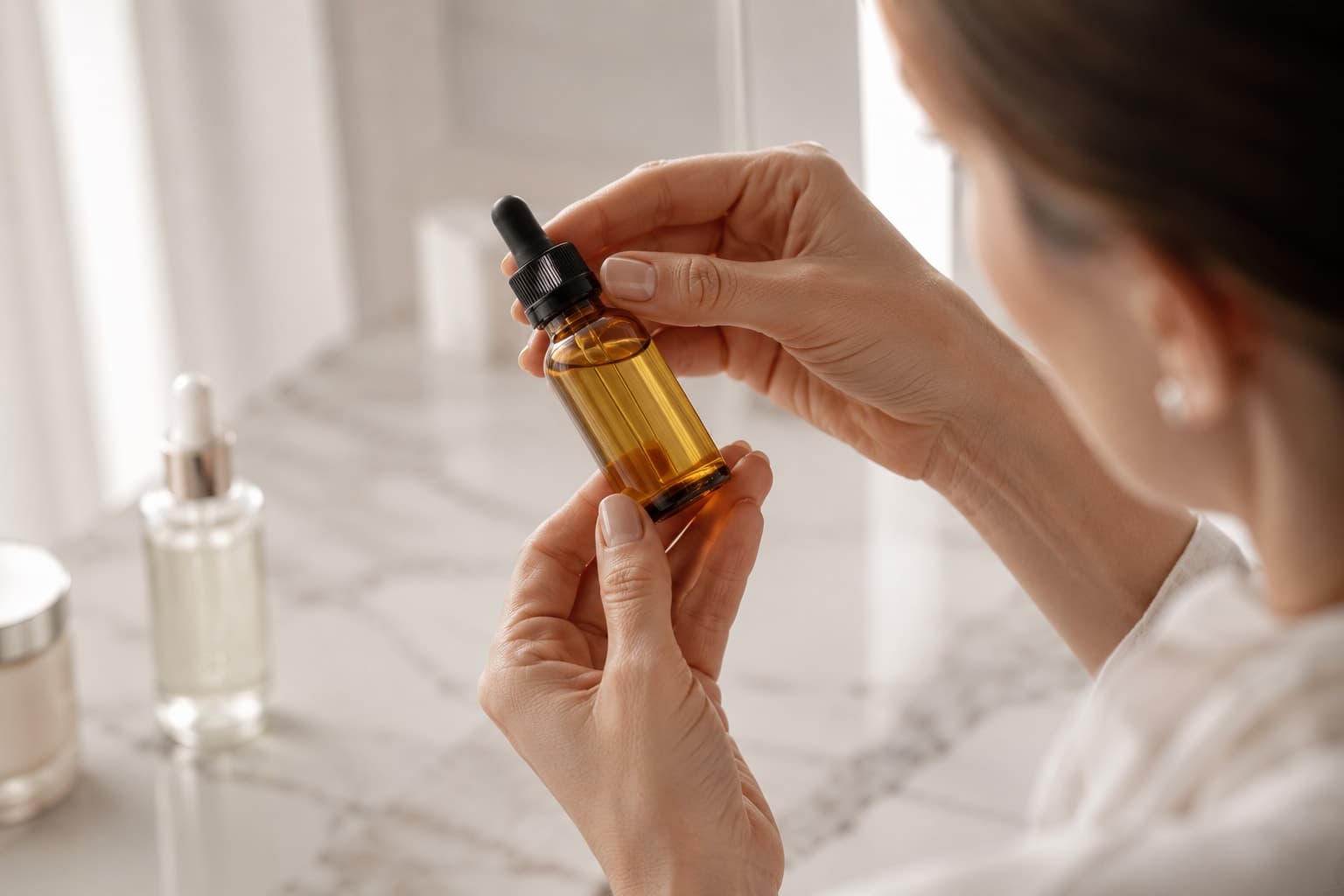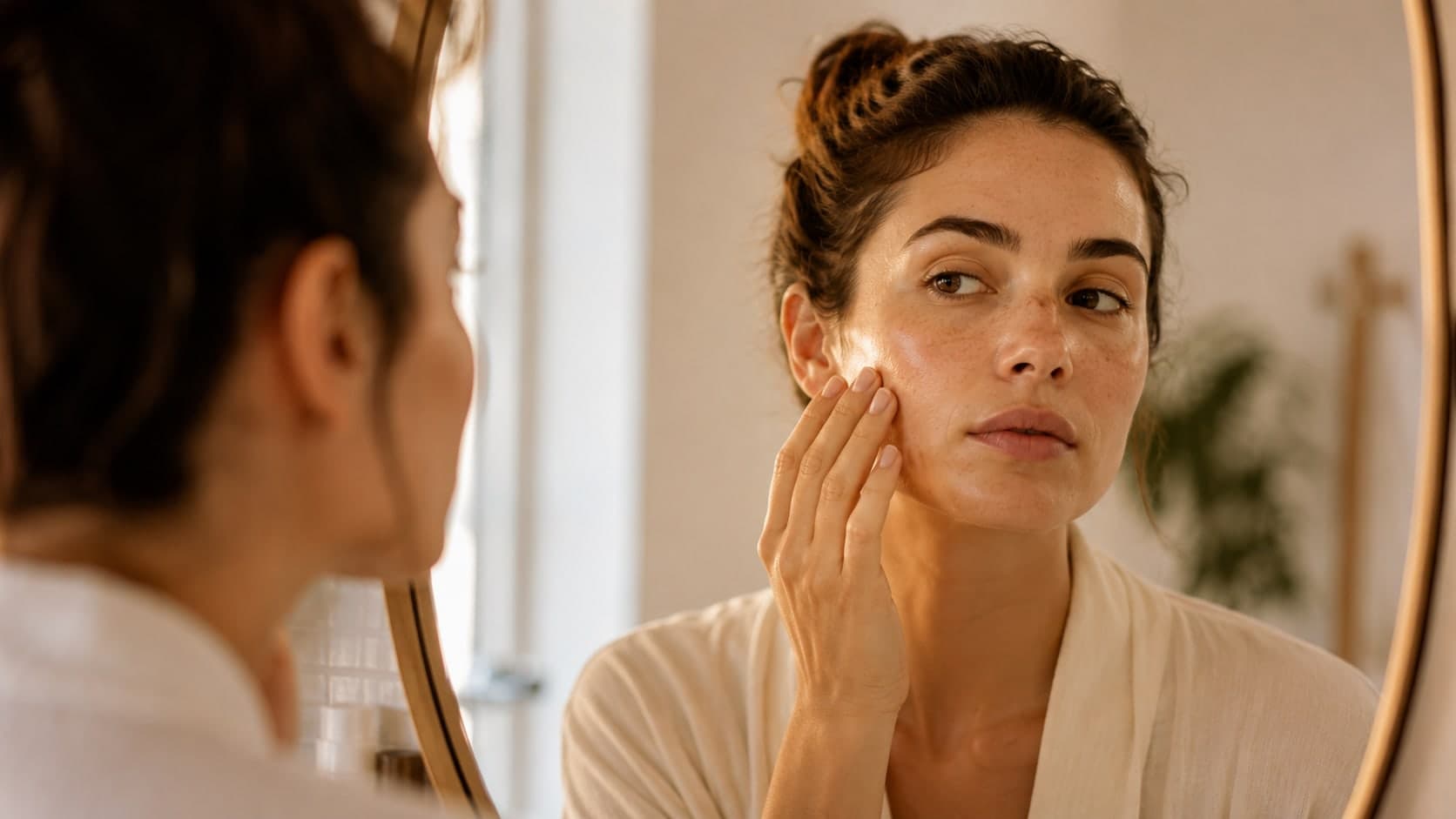
You bought the brightening serum. Your skin still looks tired. The problem is not the product. It is that dull skin is four different biological problems, and most serums address one of them.
Skin looks dull when light cannot reflect uniformly off its surface. Four distinct biological mechanisms cause this: accumulation of dead skin cells that scatter light instead of bouncing it evenly; advanced glycation end products that cause collagen to yellow; uneven melanin distribution that creates a flat, patchy tone; and barrier dehydration that reduces the skin's natural reflectivity. Each has a different cause and a different fix. Treating the wrong one is why the same brightening product works beautifully for some people and does nothing for others.
Dull skin is not a skin type. It is not what your skin is. It is what your skin does when something specific is going wrong at the cellular level, and the problem is that four very different things can produce the same flat, tired look at the surface.
Brightening serums, glow-booster moisturizers, vitamin C complexes: each addresses one or two of those causes. When the cause they address matches your skin's specific problem, they produce results. When they do not match, they do very little. This is not a product quality issue. It is a diagnostic one.
What Dull Skin Actually Is
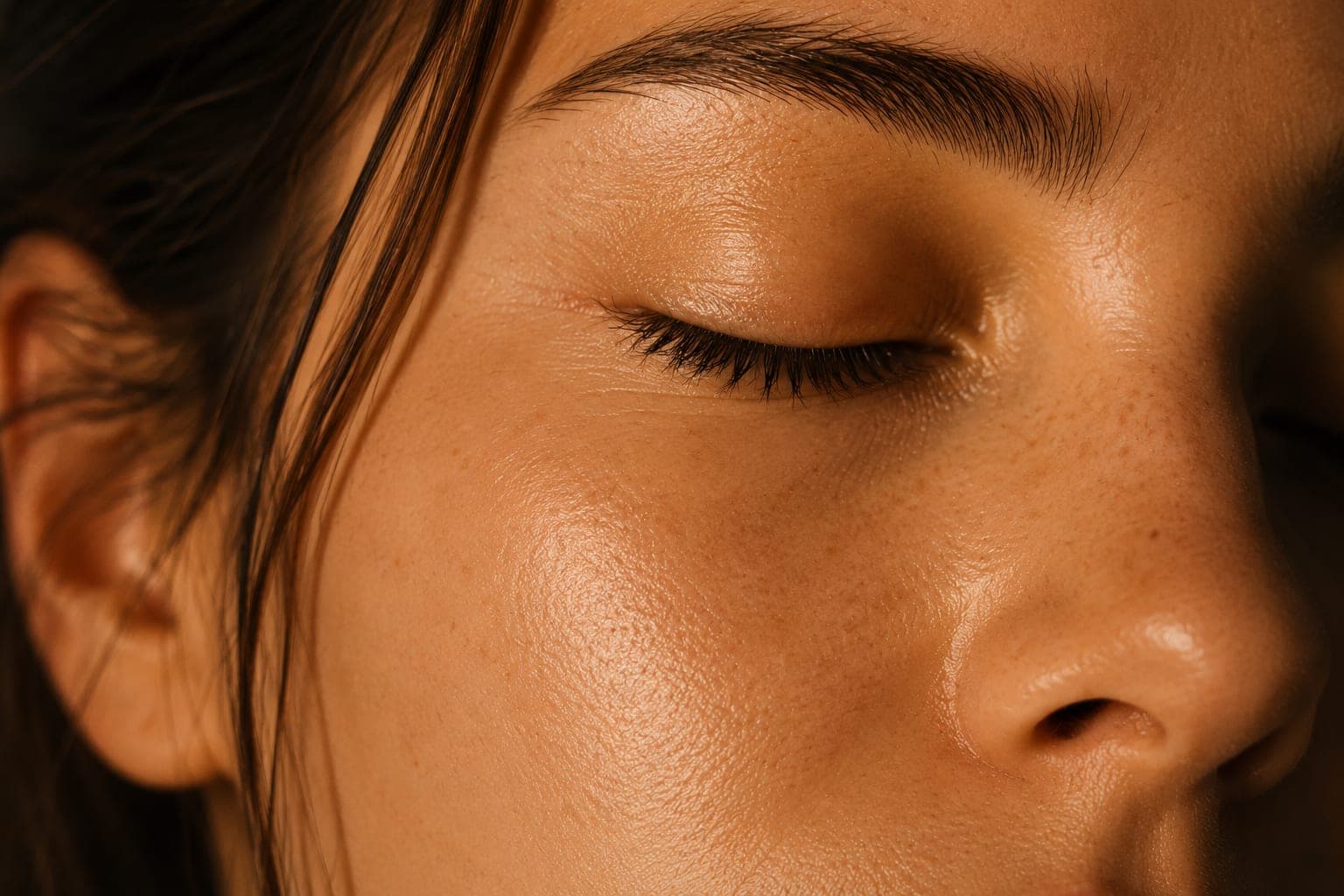
Healthy skin has a specific optical property. Its surface, when the outermost cells are young, flat, and well-organized, reflects light in a relatively uniform direction. This is what creates the perception of radiance: the skin appears to have depth, a subtle luminosity, a sense of life. The same light hitting a surface covered in uneven, thickened, or damaged cells scatters in multiple directions instead. The result is a flat, gray appearance that no active ingredient can address if the underlying cause is not identified first.
The comparison is close to the difference between a mirror and a frosted window. Both receive the same light. One reflects it in a single coherent direction. The other disperses it into a diffuse scatter that flattens everything. Your skin's optical quality is not fixed. It changes based on how well four different cellular processes are running at any given time.
The natural glow of healthy skin is not a coating on the surface. It is a property of how organized and evenly-shed the surface cells are. A product cannot grant that organization from outside. The cells themselves have to produce it.
The First Cause: Dead Cells That Block the Reflection
The outermost layer of skin is called the stratum corneum, a thin layer of dead, flattened skin cells that have completed their lifecycle and are waiting to shed naturally. In younger or well-functioning skin, cell turnover is consistent and these cells release before they accumulate. With age, chronic stress, or disrupted skin function, the turnover rate slows. Dead cells pile up, thicken the surface, and scatter light in irregular directions rather than reflecting it.
This is the most common cause of dull skin and the most directly correctable. AHAs, alpha-hydroxy acids including glycolic and lactic acid, dissolve the bonds holding dead cells to the surface, allowing the stratum corneum to shed more evenly. The brightness that follows exfoliation is not a product adding something to the skin. It is the removal of what was blocking a reflection that was already there.
The Second Cause: What Sugar Does to Your Collagen
Glycation is the least discussed of the four causes and likely the most underestimated. The word describes a chemical reaction in which sugar molecules attach to proteins in the body without enzyme involvement: a process that is continuous, cumulative, and largely invisible until its effects have built up over years. In skin, the proteins most affected are collagen and elastin, the structural fibers that give skin its firmness and bounce. When sugar binds to them, it forms compounds called advanced glycation end products, commonly shortened to AGEs. These compounds cross-link collagen fibers together, causing them to stiffen, and they produce a yellow-brown discoloration in the tissue. The skin's natural collagen starts to look worn before it is.
A systematic review of the literature on advanced glycation end products in dermal tissue analyzed the structural mechanisms by which AGE formation in collagen and elastin fibers produces measurable changes in skin appearance and mechanical behavior across different age groups.
“AGEs accumulate in skin collagen with advancing age and are associated with characteristic changes in skin color and mechanical properties, including increased yellowness and loss of elasticity.”
The practical implication is specific: the sallow or yellowish tone that often accompanies dull skin in people over 35 is not simply tiredness or dehydration. It is frequently the visible consequence of glycated collagen accumulating over time. Exfoliation does not address this. Vitamin C provides some benefit through antioxidant action and collagen support. Consistent sun protection matters more than most people expect: UV exposure significantly accelerates AGE formation in skin tissue.
The Third Cause: Melanin Sitting in the Wrong Places
Melanin is the pigment produced by melanocyte cells in the skin, primarily to absorb UV radiation and protect the deeper tissue layers from damage. In healthy skin, melanin distributes relatively evenly, which is what produces an even skin tone. When melanin production is upregulated by sun exposure, inflammation, or hormonal shifts, it tends to concentrate in clusters. The result is not always obvious dark spots or hyperpigmentation. More often it is a subtle unevenness: a flatness, a loss of tonal depth, a sense that the skin looks patchy without a clear reason. This form of dullness does not respond to exfoliation or glycation approaches.
Niacinamide and vitamin C address melanin-related dullness through distinct pathways. Niacinamide, vitamin B3, inhibits the transfer of melanin from melanocytes to surrounding skin cells, reducing how much pigment reaches the surface without affecting its production at the source. L-ascorbic acid, the active form of vitamin C, inhibits tyrosinase, the enzyme that catalyzes melanin synthesis. Both require 8 to 12 weeks of consistent use before visible changes in tone appear. Neither is a quick fix. Both work on a different mechanism than the previous two causes.
The Fourth Cause: A Barrier Losing Water Faster Than It Should
This cause is regularly misunderstood, and the misunderstanding starts with the word hydration. Skin does not become surface-dehydrated because you are not drinking enough water. The water content in your plasma and in the deeper skin layers is regulated by internal homeostasis, largely independent of surface barrier function. Surface dehydration occurs when the outermost skin layer, the stratum corneum, is not retaining water effectively: water evaporates through it too quickly, a process measured clinically as transepidermal water loss, or TEWL. It is determined by the integrity of the lipid structure between dead cells at the surface, not by fluid intake.
A review of stratum corneum physiology examined the structural relationship between barrier integrity and water retention, analyzing how disruption of the lipid layers within the outermost skin layer affects transepidermal water loss rates and the resulting surface properties under various conditions.
“An intact stratum corneum with well-organized lipid lamellae is essential for maintaining low transepidermal water loss and the surface hydration properties associated with normal skin appearance.”
When water evaporates faster than the barrier can retain it, the dead cells in the stratum corneum become less plump, the surface texture becomes irregular, and the light-reflecting quality drops. A moisturizer produces immediate glow partly because it temporarily reduces water loss at the surface. But the dullness returns within hours if the barrier's own lipid structure is not supported. Ceramides, fatty acids, and cholesterol, in a ratio that approximates what healthy skin naturally produces, address the structural cause rather than the symptom.
| Cause | What it looks like | What does not help | What actually helps |
|---|---|---|---|
| Dead cell buildup | Gray, flat, opaque skin even after moisturizing | Vitamin C serum alone | AHAs (glycolic, lactic acid), consistent exfoliation |
| Glycation | Yellowish or sallow tone, especially after 35 | Exfoliation | Sun protection daily, vitamin C, minimizing dietary AGEs |
| Melanin unevenness | Flat tone with subtle patchiness, no obvious dark spots | Exfoliation alone | Niacinamide, L-ascorbic acid vitamin C, sun protection |
| Barrier dehydration | Dull skin that returns hours after moisturizing | Drinking more water | Ceramides, fatty acids, humectants (hyaluronic acid, glycerin) |
How to Read Your Own Skin
The table above is a diagnostic guide, not a shopping list. Most people dealing with persistent dull skin are dealing primarily with one or two of these causes, not all four equally. The signals are distinct enough to separate them.
Gray or flat skin that brightens immediately after exfoliation and returns within a few days points strongly to dead cell accumulation. A yellowish or sallow tone that has developed gradually over years and does not respond to exfoliation is more consistent with glycation. Uneven tone with subtle patchiness, the kind that makes foundation look flat even when skin is clean, typically reflects melanin distribution. Skin that feels tight within an hour of moisturizing, or that looks dull even immediately after a careful cleansing and hydration routine, usually reflects barrier dehydration with elevated water loss. These overlap frequently, but identifying the primary driver is what determines where to start, not what to layer.
- Using a brightening serum before identifying which of the four causes is primary: the wrong product on the wrong cause produces nothing
- Drinking more water to address surface dehydration: skin surface hydration is controlled by barrier lipid integrity, not plasma fluid levels
- Exfoliating more aggressively when glycation or melanin is the primary driver: this treats a different mechanism than the one responsible
- Layering multiple actives simultaneously to cover all causes at once: this frequently compromises the barrier and worsens dehydration-related dullness
- Expecting any single ingredient to address all four causes: the biology is distinct for each, and no product covers all of them
The Question That Changes What You Buy
The skincare industry has a clear interest in presenting dull skin as one problem with one product solution. A brightening serum that genuinely addresses all four mechanisms would be a remarkable thing, and it does not exist.
The useful question is not what gives me glow. The useful question is which of my skin's systems is not functioning correctly right now. Is the surface not shedding? Is the collagen yellowing? Is melanin concentrating unevenly? Is the barrier losing water? Each answer points to a different biological process and a different appropriate response. The product that follows from the correct answer tends not to be a glow serum. It is a targeted intervention in a specific mechanism. And what it produces looks better not because something was added to the skin, but because something was finally addressed.
Want to understand your pores next?
Read our breakdown of what actually changes pore appearance, why pores cannot open or close, and the three ingredients with real evidence behind them.
Explore Skin ScienceGetClariSync Skin Desk
Editorial Research · Dermatological Science
The GetClariSync Skin Desk reviews research in dermatological science, cosmetic chemistry, and skin biology. We follow journals including the Journal of the American Academy of Dermatology, the British Journal of Dermatology, JAMA Dermatology, and the International Journal of Cosmetic Science. We assess ingredients against clinical evidence rather than marketing claims and we are explicit about the concentration, vehicle, and study quality required for an effect. We are editorial researchers, not board-certified dermatologists — please consult a qualified dermatologist for persistent skin conditions, before starting prescription-strength treatments (e.g. tretinoin), or if you have sensitive or compromised skin.