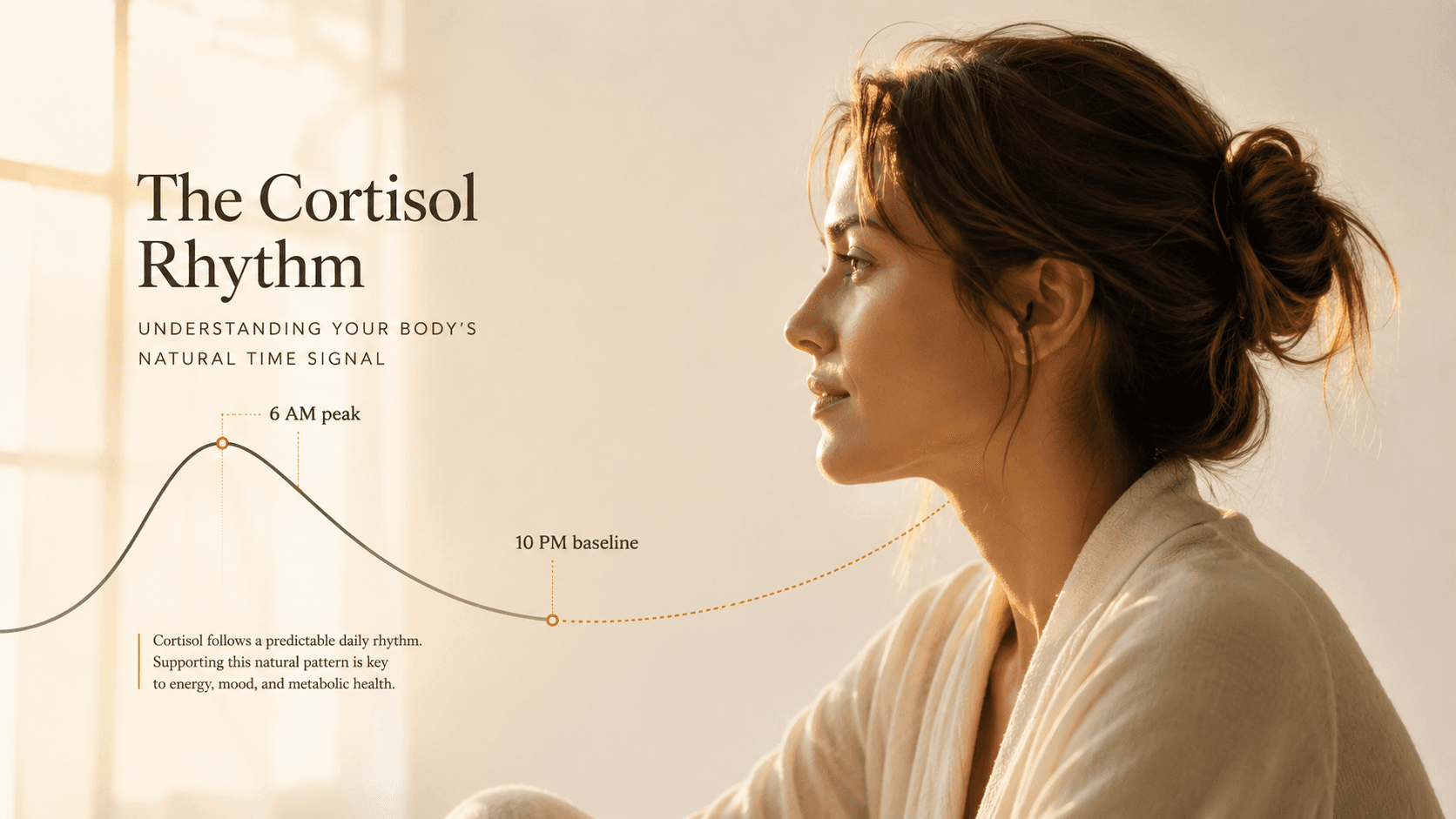
You survived the deadline. You handed in the project. You boarded the flight to somewhere warm. And on day two of your vacation, your body collapsed.
Cortisol, the hormone released during stress, actively suppresses immune activity to keep you functional under pressure. When stress lifts and cortisol drops, your immune system rebounds — and that rebound is when illness strikes. Research in psychoneuroimmunology shows this pattern is not coincidence. It is the body following its own triage logic.
Finals week. A major product launch. Six weeks of back-to-back deadlines. You pushed through all of it without a single sick day. Then it ended. Three days later you were in bed with a fever, a box of tissues, and the quiet suspicion that your body had chosen the worst possible moment to fall apart. It hadn't. It had been following a precise immunological sequence — one that science has been documenting for over thirty years.
The popular model of stress and illness gets the causality backwards. Most people believe stress weakens the immune system, leaving them vulnerable to whatever is circulating. Partly true. The full picture is more interesting: during active stress, the body doesn't weaken. It delays. Delays have a settling-up.
What Cortisol Is Actually Doing During Stress
Cortisol is a glucocorticoid — a steroid hormone released by the adrenal glands in response to perceived threat. Its reputation in wellness culture is almost entirely negative: the stress hormone, the thing that stores fat, the thing breathing exercises are supposed to lower. That reputation is incomplete.
In the short term, cortisol is anti-inflammatory and immunosuppressive. This is not a malfunction. When you are under acute performance pressure, mounting a full immune response would divert resources away from the muscles, heart, and brain — the systems that keep you functional in the immediate moment. Suppressing immune activity during threat is the body being precise, not compromised.
Glucocorticoids like cortisol reduce the production of pro-inflammatory cytokines and inhibit the proliferation of immune cells including natural killer (NK) cells and lymphocytes. Under acute threat, this suppression prevents the immune system from consuming energy and triggering inflammation in tissues that need to remain functional. The immune system is not switched off — it is placed on hold. The logic mirrors emergency triage: address the immediate crisis first, defer maintenance. The problem begins when the crisis never formally ends.
“Chronic stressors were associated with suppression of both cellular and humoral measures. The effects were stronger for older adults and for people who were already sick, suggesting compounding vulnerability over time.”
The Rebound: What Happens in Your Body When Stress Ends
When the stressor resolves — the exam is submitted, the project is delivered, the flight departs — cortisol levels begin normalizing. The triage is lifted. The immune system, held in check for days or weeks, starts processing the backlog.
This rebound is not gentle. Pro-inflammatory cytokines increase. Natural killer cell activity fluctuates. Latent viruses that cortisol had been holding dormant can reactivate. The Epstein-Barr virus (EBV), which most adults carry in a dormant state, shows measurable reactivation during and after periods of chronic stress in studies of caregivers, medical students, and long-haul military personnel. What registers as a new infection is sometimes the body finally confronting something that was already there.
Cold sores follow the same logic. Herpes simplex type 1 remains latent in nerve ganglia and reactivates when cortisol-mediated suppression lifts — which is why an eruption typically appears not during peak stress but in the days immediately after.

What Three Decades of Research Actually Show
In 1991, Sheldon Cohen and colleagues at Carnegie Mellon published one of the most controlled studies in the history of stress research. They administered one of five respiratory viruses directly to 394 healthy participants, measured their psychological stress levels beforehand, and tracked who developed a clinical cold. The result was a clear dose-response: higher stress scores predicted higher infection rates, independent of health behaviors, sleep quality, and prior immunity.
“The rates of both respiratory infection and clinical colds increased in a dose-response manner with increases in the degree of psychological stress.”
The study established that stress and illness are causally connected. What it could not isolate in a single exposure design was the timing gap — the window between stress resolution and symptom onset. That gap is where psychoneuroimmunology has focused much of its subsequent work.
Acute stress (hours)
- Cortisol briefly elevates — adaptive, protective
- Immune activity partially redirected, not suppressed
- Natural killer cell activity may temporarily increase
- System returns to baseline within hours
- Low illness risk if exposure is brief
Chronic stress (weeks to months)
- Sustained cortisol elevation suppresses immune regulation
- Glucocorticoid receptor resistance develops over time
- NK cell activity and lymphocyte proliferation decline
- Latent viruses (EBV, HSV-1) reactivate more frequently
- Rebound illness risk highest in first days after stress ends
Which Illnesses Follow This Pattern Most Closely
Not all illness obeys the rebound pattern equally. Respiratory infections — colds, flu-like illness, upper respiratory tract infections — are the most consistently linked to post-stress vulnerability in the literature. The mucosa lining the nose and throat is particularly sensitive to cortisol-mediated changes in secretory immunoglobulin A (sIgA), the antibody that forms the first line of defense against airborne pathogens.
Herpes simplex reactivations (cold sores, genital herpes) show a well-documented relationship with stress-then-relief timing. Fatigue syndromes after sustained overwork — sometimes labeled burnout, sometimes post-exertional malaise — share overlapping mechanisms with the immune rebound model. They are not purely psychological. There is inflammatory biology underneath.
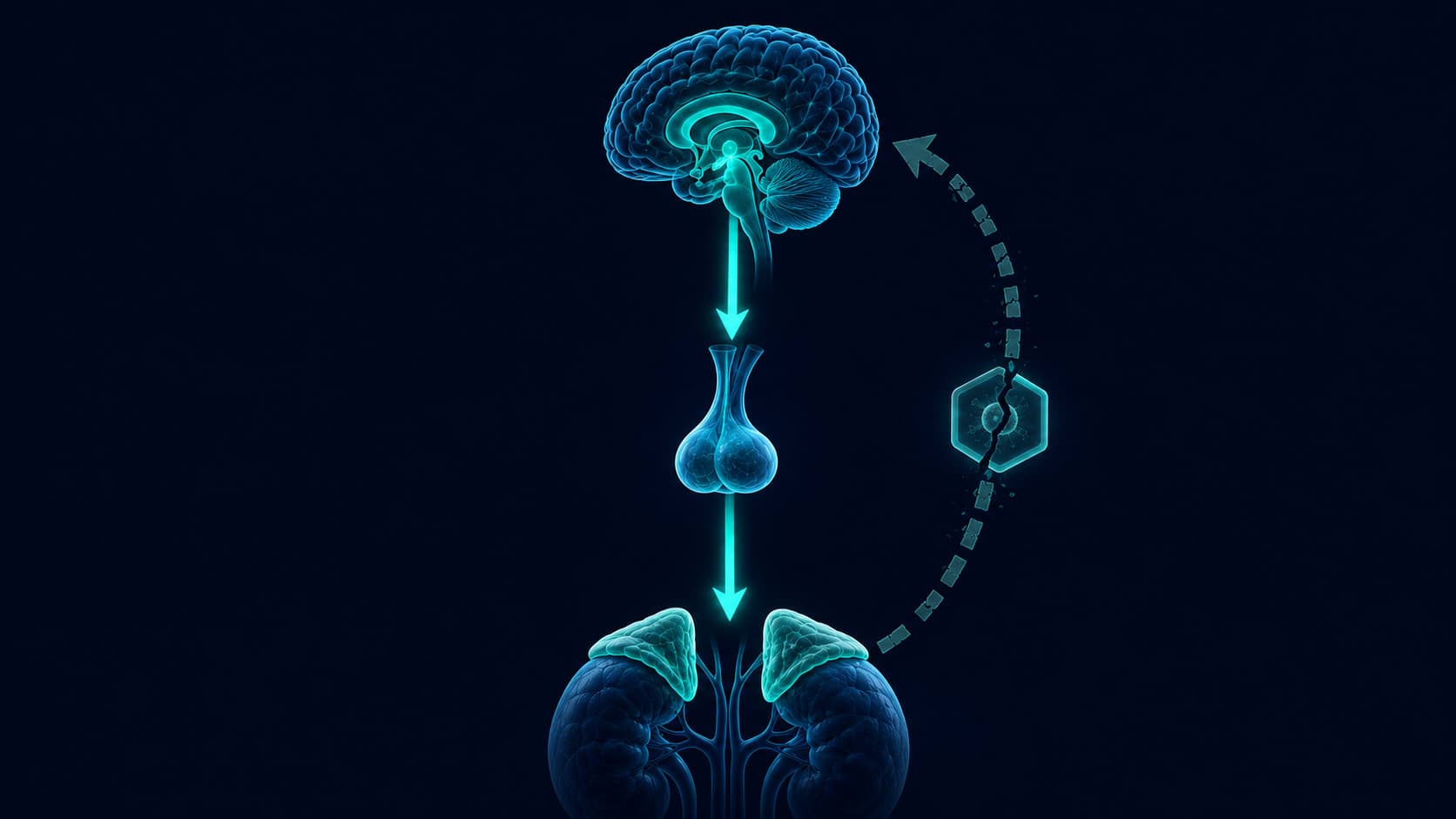
“Psychological stress influences immune function through pathways involving the hypothalamic-pituitary-adrenal axis and the sympathetic-adrenal-medullary axis, with downstream effects on inflammatory cytokines and antiviral immunity.”
Managing the Transition Out of Stress
The worst way to end a stressful period is abruptly. Going from maximum output to complete rest in 24 hours creates the steepest cortisol drop and the most pronounced immune rebound. The body does better with graduated transitions — not because of mysticism, but because the endocrine system takes days to recalibrate, not hours.
Taper, don't stop cold
After a sustained high-stress period, avoid collapsing immediately into full passivity. Two to three days of reduced-intensity activity — light movement, shorter work sessions, social time — allows cortisol to normalize more gradually than a hard stop.
High impactPrioritize sleep before the transition peak
Sleep is when immune surveillance is most active and when cytokine signaling consolidates. Getting consistent sleep in the 48 hours before and after a major stressor ends gives the immune rebound a better-resourced environment to work in.
High impactReduce inflammatory inputs during the window
Alcohol, processed food, and sleep deprivation all amplify the inflammatory signal of immune rebound. The first 72 hours after sustained stress resolves is the wrong time to celebrate hard. The body is already managing a significant internal transition.
CriticalRecognize the signal, don't fight it
A mild illness in the days after stress resolves is often the immune system completing the work it deferred. Rest rather than suppress. Pushing through with stimulants delays recovery and extends the inflammatory window.
High impact
“Activation of the sympathetic nervous system and HPA axis during stress produces immune modulation that is not immediately reversed upon stressor termination, creating a lag period of altered immunological activity.”
Migraines follow the same cortisol-drop logic. Research on what clinicians call the 'let-down headache' shows that weekend migraines and post-deadline migraines cluster in the 6 to 18 hours after sustained tension resolves — not during it. The brain, like the immune system, bills you after the emergency.
Your body is more logical than you think.
GetClariSync covers the biology behind experiences you've had but never had explained — starting with the research, not the reassurance.
Explore more body scienceGetClariSync Body Desk
Editorial Research · Sports & Movement Science
The GetClariSync Body Desk reviews research in exercise physiology, recovery science, and sports nutrition. We follow journals including Medicine & Science in Sports & Exercise, the Journal of Applied Physiology, the British Journal of Sports Medicine, and the European Journal of Applied Physiology. We separate findings from trained-athlete populations from those relevant to recreational readers, and we flag when transferring a protocol across populations is unsupported. We are editorial researchers, not certified trainers, physiotherapists, or sports physicians — please consult a qualified professional before starting new exercise programs, especially with existing injuries, pregnancy, cardiovascular conditions, or chronic disease.